500-1
500-2
500-3

Industry News

Look forward to sincere cooperation with every customer!

2026 Best Corrugated PP Box for Global Buyers?

Global buyers are reassessing packaging performance, reuse, and total cost in 2026. A Corrugated Pp Box deserves attention because it is lightweight, moisture-resistant, and suitable for repeated handling. Its hollow fluted structure can protect auto parts, produce, electronics, and warehouse components during long-distance shipment.

Market evidence supports this shift. Smithers’ The Future of Corrugated Packaging to 2029 reports continued global demand for protective packaging, driven by e-commerce, industrial distribution, and supply-chain expansion. However, that report mainly covers paper-based corrugated packaging, not polypropylene boxes. This distinction matters. Grand View Research and Mordor Intelligence also identify steady growth in corrugated plastic sheets and reusable plastic packaging applications, although their market boundaries and forecasts differ.

The OECD’s Global Plastics Outlook estimates that global plastic waste reached 353 million tonnes in 2019. That figure should make buyers cautious, not merely optimistic. Reusability alone does not prove sustainability. Buyers should verify recycled content, collection systems, product life, and end-of-life options in each destination market. Small details matter.

Check the box.

A reliable supplier should provide compression testing, dimensional tolerances, hinge-cycle results, load ratings, and material declarations. Experience also shows that a thicker sheet is not always better. It may increase cost, empty weight, and transport emissions. The right specification depends on stacking height, moisture exposure, pallet design, temperature, and return logistics. This guide compares those factors for global purchasing decisions, while acknowledging one uncomfortable truth: the cheapest quotation can become the most expensive packaging choice.

2026 Best Corrugated PP Box for Global Buyers?

What Is a Corrugated PP Box and How Is It Made?

2026 Best Corrugated PP Box for Global Buyers?

What Is a Corrugated PP Box and How Is It Made?

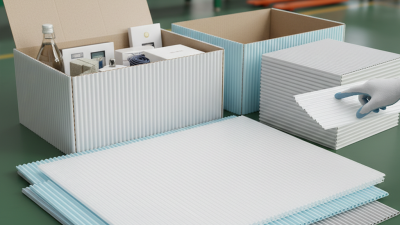
A corrugated PP box is a lightweight container made from polypropylene sheets. Unlike paper corrugated board, it resists water, oil, and repeated handling. Its structure has two flat outer skins and a ribbed inner core. Those hollow ribs add stiffness without adding much weight. The box feels firm, but it is not indestructible.

Manufacturing starts with polypropylene resin, which is melted and pushed through an extruder. A forming die creates the fluted middle layer between two smooth sheets. Heat bonds the layers into one twin-wall board. The finished sheet is then cooled, trimmed, and checked for thickness. Cutting machines score folding lines and shape handles, slots, or ventilation openings. Edges may be welded, stitched, or folded, depending on the design.

Good production requires more than clean-looking surfaces. Buyers should check sheet thickness, weight, rib direction, compression strength, and temperature performance. A box with thin walls may pass a visual inspection but fail under stacked loads. Practical testing should include drop tests, humidity exposure, and repeated folding. Small details matter, especially at the corners. Specifications can also vary between production batches, so approving only one sample is risky. I would normally request several samples and measure them before placing a large order. The process seems straightforward. It is less forgiving than it appears.

Which Materials and Structural Features Determine Box Quality?

For global buyers, a quality corrugated PP box begins with the sheet, not the printed surface. Corrugated PP uses a solid polypropylene skin around a fluted core. The core creates stiffness while keeping weight manageable. In practice, twin-wall sheets around 3 to 5 mm suit many reusable shipping applications. Heavier loads may require thicker walls, reinforced edges, or internal partitions. A thicker sheet is not automatically better.

Material consistency matters. Ask for sheet thickness, surface weight, recycled-content percentage, and test records from each production batch. Excessive recycled content can create weak spots, uneven color, or brittle folds when quality control is poor. Virgin resin can improve consistency, but it may raise environmental cost. That trade-off deserves honest review. UV stabilizers help outdoor storage, while anti-static or food-contact requirements should be verified for the intended use.

Structure often decides whether a box survives real handling. Look for locked flaps, protected corners, rounded die-cut edges, and fold lines that do not whiten or crack. The flute direction should support the main compression load. Ventilation holes can reduce condensation, but oversized openings weaken panels. Test the assembled box with actual products, stacked loads, vibration, and temperature changes. Do not rely on a clean sample alone. A box that performs well empty may deform around a sharp component. Measure compression after repeated folding, too. Reuse exposes weaknesses quickly.

How to Match Corrugated PP Boxes to Different Applications?

Choosing the right corrugated PP box starts with the application, not the catalog image. I have seen strong boxes fail when wet loads softened their labels or exceeded the base design. Match the box wall thickness to product weight, stacking height, and handling frequency. Light packaging suits folded garments, printed materials, and small components. Heavier formats work better for metal parts, tools, and warehouse transfers. Add internal dividers when products can strike each other during transport. A tight fit also reduces movement and surface damage.

Moisture changes the decision. Corrugated PP resists water better than paper-based packaging, making it useful for agricultural supplies, chilled distribution, and outdoor storage. However, water resistance does not mean unlimited exposure. Select washable surfaces and drainage-friendly designs where condensation is common. For food-related use, request documented material compliance for the destination market. For export shipments, confirm dimensions, load testing, labeling, and recycling requirements before production. Color can help warehouse sorting, but it should not replace clear identification labels. Keep handles reinforced if workers will carry full boxes repeatedly. Small details matter.

One practical mistake is choosing maximum strength everywhere. It raises cost, weight, and storage space without improving every application. Test a filled box on a pallet, after vibration and repeated handling. The result may challenge the first specification.

What Should Global Buyers Check in Suppliers and Compliance?

For global buyers, a corrugated PP box supplier needs more than attractive samples. Check sheet thickness, weight tolerance, folding strength, stacking performance, and print adhesion. Ask for batch records, inspection photos, and a clear corrective-action process. ISO’s 2023 Survey counted more than 1.2 million ISO 9001 certificates worldwide. Certification helps, but it does not replace factory verification.

Compliance must match the destination and the box’s intended use. Request material declarations, restricted-substance test reports, and traceability from resin to finished box. Food-contact applications require separate migration testing. Environmental claims need evidence, not green language. The OECD’s Global Plastics Outlook reports that only 9% of plastic waste was recycled in 2019. Therefore, verify recycled content through supplier records or independent testing. A recycled claim without documentation is weak.

Tips: Send the supplier a small pilot order. Test boxes after stacking, moisture exposure, folding, and repeated handling. Confirm carton dimensions after production, not only from drawings. Check the factory address, legal entity, audit history, and subcontracting policy. Keep retained samples from every batch. A low price can look efficient. It may hide thinner sheets or unstable supply. I would still challenge my own checklist, because one successful sample proves very little.

2026 Best Corrugated PP Box for Global Buyers?

Key supplier and compliance references to check when sourcing corrugated polypropylene boxes for international shipments.

The chart shows the publication year of recognized packaging and transport-test references commonly used in supplier verification. Buyers should request test reports, material specifications, food-contact declarations when applicable, compression results, transport-test evidence, and environmental documentation. Always confirm the applicable market requirements and the latest edition with the supplier and an accredited testing laboratory.

References: ISO 18601:2013, ISO 18602:2013, ISO 18604:2013, ISO 18606:2013, ISO 12048:2016, and ASTM D4169-23.

How to Compare Cost, Logistics, Durability, and Sustainability?

2026 Best Corrugated PP Box for Global Buyers?

How to Compare Cost, Logistics, Durability, and Sustainability?

A corrugated PP box should be judged by landed cost, not unit price. Compare resin, printing, tooling, labor, freight, storage, and return handling. Its low weight can reduce transport expense. However, empty boxes may consume more warehouse space than folded fiber cartons. Measure packed volume carefully. Small errors multiply across containers.

Durability needs physical evidence. Request edge-crush, compression, drop, moisture, and temperature testing. ASTM D4169 and ISTA distribution protocols offer useful testing frameworks. A box surviving 20 export cycles may outperform cheaper single-use packaging. Still, “reusable” is not automatic. Damaged hinges, missing labels, and reverse logistics can reduce real savings. Test with actual products, pallets, and handling conditions.

Sustainability requires caution. The OECD Global Plastics Outlook reported 353 million tonnes of plastic waste in 2019, while only 9% was recycled. Reuse can reduce waste, but only when return rates are high. The UNEP report Turning off the Tap states that plastic pollution could fall substantially by 2040 through reuse, recycling, and reduced consumption. Buyers should request recycled-content data, material composition, and end-of-life instructions. Compare impacts through ISO 14040 and ISO 14044 life-cycle assessment principles. A thinner box is not always greener. This is where many purchasing models remain incomplete.

2026 Best Corrugated PP Box for Global Buyers? - How to Compare Cost, Logistics, Durability, and Sustainability?

Indicative comparison for reusable corrugated polypropylene boxes. Actual results vary by box dimensions, tooling, order quantity, loading method, climate, handling conditions, and destination market.

Box Configuration Typical Wall Thickness Indicative Unit Cost* (USD) Approx. Box Weight** Typical Reuse Potential Moisture and Chemical Resistance Flat-Pack Logistics Best-Fit Applications Sustainability Considerations
Light-duty single-wall PP box
Folded or stitched construction with standard fluting
2.0–2.5 mm $1.80–$3.20
Low
0.45–0.75 kg Approximately 20–50 trips when protected from sharp edges and excessive stacking High resistance to water, humidity, and many diluted chemicals; vulnerable to puncture from sharp loads Usually ships flat; commonly reduces empty-box volume by about 70–85% compared with assembled boxes Light components, agricultural produce, short-distance returnable packaging, warehouse picking Polypropylene is generally recyclable under resin identification code 5; recycling access depends on local facilities
Standard single-wall PP box
Reinforced flaps and practical returnable design
3.0–3.5 mm $2.60–$4.80
Low–Medium
0.65–1.05 kg Approximately 50–100 trips under normal warehouse and transport handling High moisture resistance; does not absorb water like paper-based corrugated board Suitable for flat packing and nesting; good balance between freight efficiency and structural performance Automotive components, electronics packaging, distribution totes, retail replenishment Reusable construction can reduce single-use packaging demand; avoid permanent mixed-material fittings where possible
Heavy-duty double-wall PP box
Thick sheet or reinforced panel construction
4.5–6.0 mm $4.50–$8.50
Medium–High
1.10–1.90 kg Approximately 100–200 trips when correctly sized and not overloaded High resistance to moisture, oils, and many industrial contaminants; check chemical compatibility for specific substances Flat-packable, but larger folded panels may require more container space than light-duty grades Heavy parts, export shipments, industrial components, closed-loop supply chains Higher material use per box but usually provides longer service life; recycling value improves when contamination is minimized
Collapsible PP sleeve-pack system
Foldable sleeve with separate lid and pallet base
3.5–5.0 mm sleeve panels $8.00–$18.00
Medium–High
3.0–7.0 kg per complete system Approximately 200–500 trips with proper stacking, cleaning, and component replacement High resistance to rain and wash-down conditions; drainage and cleaning design should be specified Collapses after use and can significantly reduce return freight volume; empty-return savings depend on the folding ratio Automotive logistics, palletized export loads, high-frequency closed-loop transport Strongest lifecycle case when return rates are high; calculate reverse logistics and cleaning impacts before selection
ESD-safe PP box
Conductive or dissipative additives with controlled surface resistance
3.0–5.0 mm $4.00–$10.00
Medium–High
0.80–1.80 kg Approximately 50–150 trips, depending on abrasion and surface-resistance requirements Good moisture resistance; ESD performance can change with contamination, wear, humidity, and cleaning chemicals Usually flat-packable or nestable; confirm that folds and closures maintain electrical continuity Electronic assemblies, semiconductor components, sensors, and static-sensitive parts Reuse can lower packaging waste, but additives and contamination may affect recycling acceptance; verify with the recycler
Flame-retardant PP box
Modified material for specified fire-performance requirements
3.0–6.0 mm $5.00–$12.00
High
0.90–2.20 kg Approximately 50–150 trips, subject to heat exposure and handling conditions Good moisture resistance; fire performance must be validated against the required test method Flat-pack logistics are generally available, though heavier material may reduce freight savings Electrical equipment, transportation interiors, and applications with documented fire-performance needs Special additives may limit recycling routes; request material declarations and end-of-life guidance
Cost basis: Indicative ex-works unit ranges for a medium-size box around 600 × 400 × 300 mm, standard color, non-customized printing, and an order quantity of approximately 1,000 units. Tooling, printing, inserts, taxes, duties, and international freight are excluded.

Logistics note: Actual container utilization depends on folded dimensions, pallet pattern, compression protection, and whether lids, sleeves, pallets, or accessories ship separately.

Selection rule: Choose the light-duty grade for low-load, short-cycle use; standard single-wall for general returnable packaging; heavy-duty or sleeve-pack systems for high-load and high-return-frequency operations; and specialty grades only when ESD or fire-performance requirements are documented.