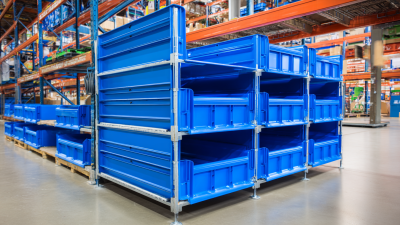
Choosing a Pp Corrugated Bin for global sourcing requires more than comparing unit prices. The right bin must match your product, warehouse process, shipping route, and supplier capabilities. A bin that works well in a dry warehouse may perform poorly in humid ports or cold storage areas.
Start with the operating details. Measure the product, including handles, protective wrapping, and clearance for easy removal. Record the expected load, stacking height, folding frequency, and cleaning method. For example, a 600 × 400 mm footprint may fit standard pallets efficiently, but it can waste space in a narrow picking area. Small details matter.
Material thickness affects strength, weight, and cost. Ask suppliers for sample bins, production drawings, and test results before approving large quantities. Check wall construction, edge finishing, hinge durability, and resistance to moisture or common cleaning agents. Supplier audits should review raw material consistency, quality records, packing methods, and corrective actions.
Do not trust photographs alone. They hide weak corners.
Global sourcing also requires practical coordination. Confirm minimum order quantities, tooling fees, color tolerances, packaging dimensions, lead times, and inspection points. Request a pilot shipment before scaling production. Compare landed cost rather than factory price, including freight, damage risk, storage, and return handling. Requirements may differ across markets, so review applicable packaging, recycling, labeling, and import documentation rules with qualified local professionals.
No choice is perfect. A stronger bin may cost more or occupy extra warehouse space. A cheaper design may fail after repeated stacking. Careful testing, clear specifications, and honest supplier communication create a more reliable decision.
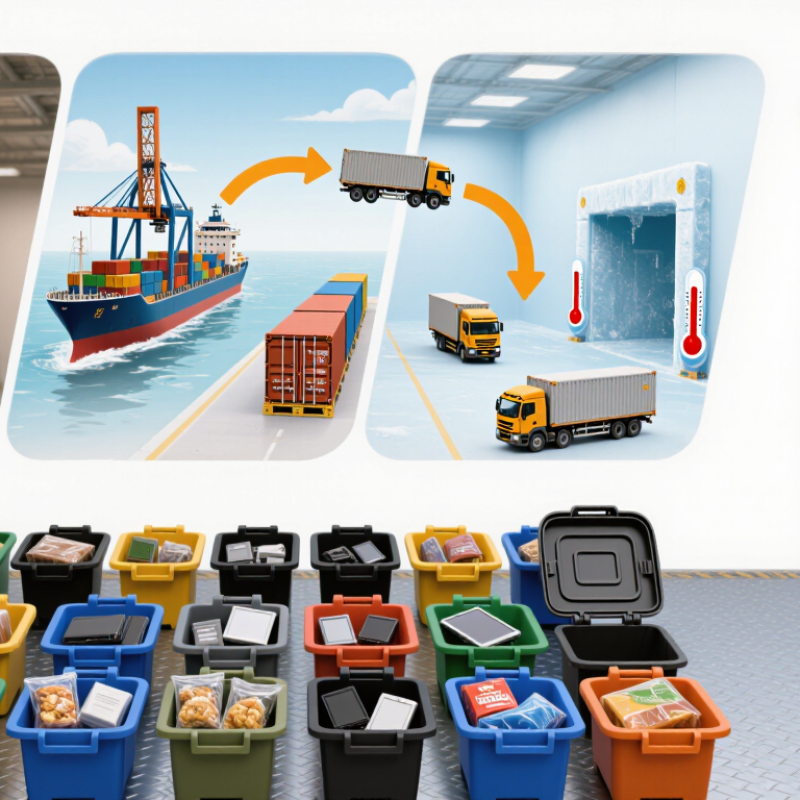
A PP corrugated bin is a reusable container made from polypropylene sheets with a fluted inner core. This structure keeps the bin lightweight while providing useful stiffness. The material resists moisture, many common chemicals, and repeated handling. Light, but not fragile.
In warehouses, workers use these bins for parts, packaged goods, documents, and small components. They can sit on shelves, move on carts, or stack during internal transport. A properly designed bin may include hand holes, lids, dividers, labels, or ventilation openings. These details improve picking speed and protect contents from dust and minor impacts. However, a vented design may not suit fine powder or moisture-sensitive products.
For global sourcing, buyers should confirm the internal dimensions, wall thickness, load capacity, folding method, and stacking height. A sample test matters more than a product photo. Load the bin with the actual contents, carry it across an uneven floor, and stack it for several days. A bin that looks strong can still deform at the corners. Temperature changes may also affect flexibility during long-distance shipping. I would avoid trusting a “heavy-duty” description without test data. Recycling options also vary by location, so material markings and local facility requirements deserve careful checking.
A PP corrugated bin should be evaluated as a working structure, not merely as a lightweight plastic box. Polypropylene offers low moisture absorption and good chemical resistance, but performance depends on sheet density, flute geometry, wall thickness, and fold design. Ask suppliers for resin specifications, recycled-content details, and batch traceability. The material may look identical. It may not perform identically.
The OECD Global Plastics Outlook projects global plastic waste could nearly triple by 2060. This makes recyclability and material separation important sourcing criteria. Choose mono-material construction where possible, and confirm whether labels, coatings, or metal fittings complicate recycling. For repeated logistics use, inspect reinforced rims, stitched or welded corners, stackable bases, and secure lids. A wide footprint improves stability, while ventilation openings may reduce weight but weaken sidewalls.
Request test evidence under realistic conditions. Compression testing should reflect stacked bin height, load duration, and warehouse temperature. Drop testing should include filled bins, not empty samples. Humidity matters. PP resists water, but contents, labels, and structural folds can still affect handling. Evaluate nesting efficiency because a ten percent reduction in return volume may influence freight costs significantly. ISO 18604 supports assessing packaging for material recycling, while ASTM D4577 provides guidance for compression testing of shipping containers. These standards help, but they do not replace trial shipments. One overlooked issue is operator handling; sharp edges, difficult grips, or unstable lids can create daily inefficiency.
Choosing the right PP corrugated bin starts with the product, not the catalog.
Measure the item’s length, width, and height at its widest points. Add 10–15 mm clearance on each side for loading and removal. For a 580 × 380 × 280 mm component, a 600 × 400 × 300 mm bin may fit, but corner interference can still occur. I have seen teams measure the product only once. That is risky. Include packaging, labels, separators, and hand clearance. The International Safe Transit Association recommends evaluating vibration, shock, and compression during distribution. Your bin must survive the route, not just the warehouse.
Load capacity needs three checks: working load, stacking load, and dynamic load. A 25 kg product does not automatically require a 25 kg-rated bin. Calculate the total mass, then apply a safety margin for forklift movement, uneven floors, and repeated handling. ASTM D642 provides a recognized compression-test method for shipping containers. ISO 2233 defines conditioning practices before testing, including temperature and humidity exposure. Ask suppliers for test results under comparable conditions. A laboratory result may not represent your actual stack pattern. That part is easy to overlook.
For example, four loaded bins may create 100 kg of vertical pressure on the bottom bin. Add impact risks during transport. If the bin has large openings, thin walls, or unsupported corners, reduce the practical rating. Prototype one loaded stack, inspect deflection after 24 hours, and repeat after distribution testing. It may cost more than choosing from a size chart. It can prevent a very expensive assumption.
Global sourcing rarely needs one universal PP corrugated bin design. The right structure depends on product weight, route length, warehouse handling, and storage space. For lightweight components, a single-wall bin with folded flaps may reduce cost and shipping volume. Heavier parts need reinforced walls, stronger corner folds, and a stable base. Measure the load in real conditions, not only in a specification sheet.
Ventilation suits produce, textiles, and moisture-sensitive goods, but open slots can weaken protection. Solid walls work better for dust-sensitive parts and long sea journeys. Internal dividers prevent scratches and mixing during repeated handling. A lid adds stacking stability, while hand holes improve picking speed. However, poorly placed holes can reduce compression strength. That detail deserves testing.
Collapsible bins support return logistics because they occupy less space when empty. This option works well when suppliers and buyers exchange packaging across continents. For automated warehouses, consistent outer dimensions and readable labels matter more than decorative features. Surface printing should withstand condensation and routine cleaning. Food-contact or recycling requirements may differ by destination, so confirm current local rules before production. I would also request a sample loaded beyond the expected weight. Designs that look efficient often fail at corners, where real handling is rougher than planned.
Choosing a PP corrugated bin for global sourcing requires more than comparing unit prices. Supplier evaluation should cover material grade, wall thickness, load capacity, folding design, and production consistency. In factory audits, I check resin documentation, sample dimensions, weld strength, and carton protection during transport. Small differences matter. A 2 mm panel variation can affect stacking stability.
Measure the real cost. Include tooling, packaging, inspection, inland transport, ocean freight, duties, storage, and rejected units. The OECD Global Plastics Outlook reports that global plastic waste reached 353 million tonnes in 2019, with packaging representing about 40 percent. This supports asking suppliers about recycled content, recyclability, and end-of-life handling. However, recycled PP may change color, stiffness, or impact performance. The cheapest option may become expensive after one damaged shipment.
Quality comparison needs measurable evidence. Request a pre-production sample, a signed specification, batch records, and test results for compression, impact, and temperature resistance. Verify whether testing follows recognized methods, such as ASTM or ISO procedures. A certificate alone is not proof. It can be outdated. Compliance checks should match the destination market, including chemical declarations, labeling, and restricted-substance requirements. For food or pharmaceutical applications, additional contact-material evidence may be necessary. This process is not perfect; supplier claims still require independent inspection and periodic re-testing.
| Comparison Dimension | Profile 1 Standard Export Supplier |
Profile 2 Quality-Focused Supplier |
Profile 3 Large-Volume Manufacturer |
What Global Buyers Should Verify |
|---|---|---|---|---|
| Typical Application | General storage, kitting, light industrial handling | Automotive parts, electronics, clean warehouse operations | High-volume returnable packaging and distribution programs | Confirm the bin’s load, stacking, handling, and environmental requirements |
| Indicative Bin Size | 600 × 400 × 300 mm | 600 × 400 × 300 mm | Custom dimensions based on pallet and product layout | Check internal dimensions, wall thickness, lid clearance, and usable volume |
| Material | Polypropylene corrugated sheet | Polypropylene corrugated sheet with controlled recycled-content options | Virgin or recycled-content PP selected according to performance requirements | Request resin information, recycled-content declaration, and material specification |
| Common Wall Thickness | 3–5 mm | 4–6 mm | 3–8 mm, depending on load and design | Compare thickness together with flute structure, edge design, and actual test results |
| Indicative Unit Price | USD 3.50–7.00 | USD 5.00–10.00 | USD 2.80–6.50 | Prices normally exclude freight, duties, tooling, printing, and special fittings |
| Typical MOQ | 500–1,000 pieces | 300–1,000 pieces | 1,000–5,000 pieces | Ask whether MOQ applies per size, color, print design, or shipment |
| Tooling or Setup Cost | Usually USD 0–500 for standard designs | Usually USD 300–1,500 for custom tooling or fittings | May be amortized into volume pricing; custom tooling can exceed USD 1,500 | Confirm ownership, lead time, revision fees, and whether tooling is refundable |
| Production Lead Time | 15–25 calendar days after approval | 20–35 calendar days after approval | 25–45 calendar days for custom or high-volume orders | Separate sample approval, production, inspection, and export-document lead times |
| Sample Policy | Standard samples usually available; freight commonly paid by buyer | Pre-production sample and dimensional report generally available | Sample may require an engineering review before production quotation | Approve a signed golden sample before mass production |
| Dimensional Tolerance | Commonly ±3–5 mm, depending on size and fabrication method | Typically controlled to approximately ±2–3 mm for defined dimensions | Project-specific tolerance stated on the approved drawing | Use a technical drawing that identifies critical-to-function dimensions |
| Load Performance | Suitable for light to medium loads; commonly 5–15 kg per bin | Suitable for medium loads; commonly 10–25 kg per bin | Can be engineered for higher loads with reinforcement and suitable stacking design | Require static load, stacking, drop, and repeated-use test data for the intended application |
| Stacking Capability | Typically 3–6 loaded bins, subject to design and load distribution | Typically 5–10 loaded bins with reinforced edges or locating features | Designed around pallet pattern, rack height, and automated handling requirements | Verify both loaded stacking strength and empty-bin nesting or collapsing performance |
| Temperature Range | Common PP service range is approximately -20°C to +80°C | Approximately -20°C to +80°C, subject to formulation and sustained load | Can be specified for broader conditions after material and performance validation | Test the product under the lowest and highest temperatures in the supply chain |
| Water and Chemical Resistance | Resistant to moisture and many diluted chemicals | Suitable for routine industrial cleaning when compatible detergents are used | Material and surface treatment can be selected for specific cleaning processes | Confirm resistance to oils, solvents, detergents, UV exposure, and disinfectants used onsite |
| Printing and Identification | Screen printing, labels, or simple one-color markings | Multi-color printing, barcodes, QR codes, and durable identification options | Large-scale variable data, molded-in identification, and tracking accessories may be available | Check print adhesion, barcode readability, abrasion resistance, and data accuracy |
| Quality Control | Visual inspection and basic dimensional checks | Incoming material, in-process, final dimensional, and functional inspections | Formal quality plans with batch records and statistical process monitoring are more likely | Request an inspection plan, acceptance criteria, defect classification, and corrective-action process |
| Recommended Pre-Shipment Inspection | Quantity, dimensions, color, printing, assembly, and visible defects | All standard checks plus load, stacking, and barcode verification where applicable | Full approval against drawing, test plan, packaging specification, and shipment configuration | Use an independent inspection or buyer-approved inspection protocol for initial orders |
| Traceability | Batch information may be available upon request | Batch number and production-date records generally recommended | Lot-level traceability and production records are more feasible for structured programs | Require traceability from raw material batch through production and shipment |
| Compliance Documentation | Material declaration and basic product specification | Material declaration, test reports, restricted-substance statement, and inspection records | Project-specific technical file with declarations, test reports, and change-control records | Verify documents against the destination market and the actual supplied material |
| Chemical Compliance | Restricted-substance declaration should be requested | Restricted-substance declaration supported by laboratory testing when required | Formal substance-management process may be available for major supply programs | For European shipments, assess applicable REACH and other destination-market requirements |
| Food-Contact Suitability | Not assumed unless specifically documented | Possible only with suitable resin, additives, process controls, and supporting declarations | Can be developed for food-contact applications when the complete compliance file is provided | Do not rely on “food grade” wording; verify the relevant regulation and intended food type |
| Recyclability | PP is generally recyclable where collection infrastructure exists | Monomaterial construction can simplify recycling; labels and fittings should be assessed | Recycled-content and take-back options may be available for closed-loop programs | Confirm polymer identification, additives, mixed-material components, and local recycling routes |
| Packaging Efficiency | Flat-packed or nested shipment can reduce freight volume | Designed nesting ratio and pallet layout can reduce landed cost | High-volume programs may use returnable logistics packaging or optimized pallet patterns | Compare packed volume, pallet utilization, container quantity, and damage risk |
| Payment and Commercial Risk | Commonly deposit plus balance before shipment | Milestone payment may be negotiated after sample and inspection approval | Longer-term contracts and volume-based terms may be possible | Link final payment to inspection approval and clearly defined product acceptance criteria |
| Best Fit | Cost-sensitive projects with standard specifications | Applications where consistent quality and documentation are priorities | Repeat orders, multi-country deployment, and high annual consumption | Select based on total landed cost, lifecycle performance, compliance risk, and service capability |
| Overall Sourcing Score | ★★★★☆ Good for standard requirements |
★★★★★ Strong balance of quality and compliance |
★★★★☆ Strong for scale and process control |
Score suppliers using the same specification, test method, commercial terms, and delivery scope |