500-1
500-2
500-3

Industry News

Look forward to sincere cooperation with every customer!

How to Choose the Best China Corrugated Protection Sheet?

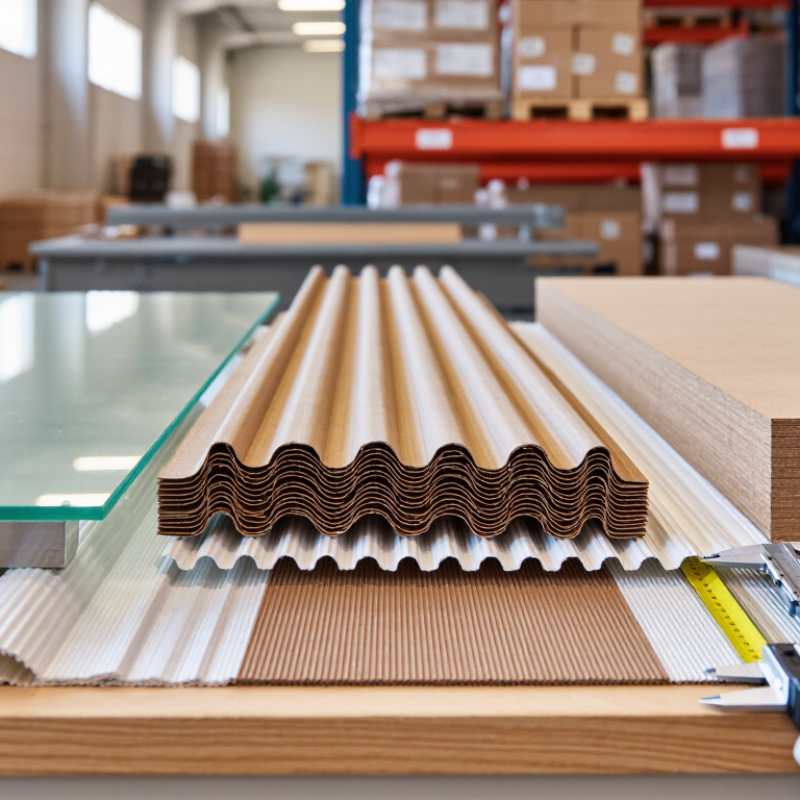
Choosing the right Corrugated Protection Sheet from China requires more than comparing prices. The material must protect products through handling, stacking, storage, and transportation. A sheet that looks strong may still bend under repeated pressure.

Start with the product’s actual risks. Heavy furniture may need a thicker board, stronger fluting, and higher edge crush resistance. Glass panels often require smooth surfaces, clean edges, and reliable cushioning between contact points. For damp warehouses, moisture resistance deserves careful attention.

China offers many manufacturers, but their capabilities can differ greatly. Experienced buyers should review paper grade, sheet thickness, flute structure, compression performance, and recycled content. Ask for recent test reports, production photos, and physical samples. Do not rely only on a polished catalog.

Small details matter. Check whether the sheet arrives flat, whether the corners are crushed, and whether dimensions remain consistent across a batch. A sample may perform well while mass production varies. That risk is easy to overlook.

Ask practical questions. Can the factory control moisture? Does it inspect every production run? Can it print, cut, fold, or customize the sheet without weakening it? Clear answers often reveal more than marketing language.

The cheapest option is not always economical. Damaged edges, customer complaints, and repacking costs can quickly exceed the original savings. Yet, higher specifications are not automatically better either. Overengineering can increase waste and freight expenses.

A reliable decision balances protection, performance, supplier experience, and total cost. It also leaves room for testing. Even experienced purchasers make assumptions that fail in real shipments. Trial orders, documented inspections, and honest evaluation create a safer path toward the best China Corrugated Protection Sheet.
How to Choose the Best China Corrugated Protection Sheet?

What Is a China Corrugated Protection Sheet?

A China corrugated protection sheet is a lightweight, fluted plastic panel made for shielding goods during storage, handling, and transport. It usually contains two flat surfaces joined by vertical ribs. These hollow channels reduce weight while adding stiffness. Unlike paper corrugated board, plastic sheets resist moisture, oil splashes, and repeated handling more effectively.

In practical packaging work, the sheet often separates stacked products, covers sharp edges, or protects painted surfaces from scratches. A suitable panel should match the product’s weight and shape. Thin sheets may work between small cartons, while thicker panels suit machinery parts or large furniture. Flute direction also matters. Ribs placed vertically usually provide better compression support. It is a small detail, but it can change performance.

When choosing a China-made sheet, check thickness, dimensions, surface quality, and material consistency. Ask for production samples and technical data before placing a large order. Look for clean edges, even ribs, and no strong chemical odor. Recycled content can reduce impact, but it may affect stiffness or appearance. This point deserves honest discussion with the supplier. Confirm moisture resistance, temperature limits, and available quality inspections. A sheet that looks strong may still bend under uneven pressure. Cost alone is not enough. Reliable specifications and traceable testing records make the choice safer.

Which Materials and Structures Suit Your Packaging Needs?

Choosing the best China corrugated protection sheet starts with the product’s actual risks. Paper-based sheets suit cartons, furniture panels, glass surfaces, and general warehouse handling. Recycled fiber can reduce cost, but its strength may vary between batches. Virgin kraft liner usually offers better stiffness and cleaner surfaces. Moisture matters too. Humidity changes everything.

Match the structure to the load. Single-wall corrugated sheets work for light separation and surface protection. Double-wall structures provide stronger cushioning for heavy appliances, machinery parts, or stacked cartons. A finer flute can create a smoother contact surface, while a larger flute absorbs more impact. The flute direction should support the expected pressure, not simply follow the sheet’s length. Thicker is not always better. It may increase shipping volume without improving protection.

During packaging trials, place sheets between sharp corners and fragile faces. Check whether edges collapse after repeated stacking. Measure the load. Ask the supplier for caliper, basis weight, moisture resistance, and compression data. Sample testing should include vibration, stacking, and temperature changes when goods travel long distances. Small gaps can let products move, while excessive tightness may mark delicate surfaces. I have seen teams choose by appearance alone, then discover weak edges during unloading. That shortcut deserves reconsideration. Test before ordering. Reliable suppliers should explain material sources, production tolerances, and inspection records clearly.

How to Evaluate Sheet Strength, Thickness, and Durability

Choosing the best China corrugated protection sheet requires more than checking its thickness. A thicker sheet can still fail if its material distribution is poor. Ask suppliers for test reports covering tensile strength, impact resistance, compression, and water absorption. Use ISO 527 for tensile testing, ISO 179 for impact testing, and ASTM D695 for compression evaluation.

Start with the real load. A sheet protecting ceramic panels needs different performance from one separating metal parts. Measure thickness at several points, not only at the edge. A practical variation above 5% should trigger questions. Check grammage too, because it often reveals hidden material reduction. The 2023 FEFCO European Database Report recorded about 51 billion square metres of European corrugated output in 2022. This scale supports one lesson: standardized testing matters more than attractive product claims.

Durability also depends on moisture, temperature, folding, and repeated handling. For outdoor or humid warehouses, request water-exposure results and dimensional-change data. For long storage, test samples under compression for at least 24 hours. Weak edges are common. I would also inspect cut surfaces for uneven cells, brittle corners, and crushed flutes. A laboratory result may not match factory handling. Therefore, conduct a small trial shipment before ordering in volume. Do not rely on a single strength value. Balance thickness, density, recovery after compression, and total cost per protected unit. Some evaluations remain imperfect, but visible evidence is better than confidence without measurement.

How to Choose the Best China Corrugated Protection Sheet?

Comparing thickness, sheet mass, and relative bending stiffness for common polypropylene corrugated protection sheets

Thicker sheets generally provide greater bending stiffness and better protection against impact and compression. The relative stiffness index is calculated from the thickness relationship (t/2)3, with 2 mm set as the reference value of 1.0. Typical sheet mass varies with flute geometry, resin density, and manufacturing design, so actual performance should be confirmed through compression, puncture, and repeated-use testing.

How to Compare Chinese Suppliers, Quality, and Certifications

How to Choose the Best China Corrugated Protection Sheet?

Comparing Chinese suppliers requires more than reviewing price lists. Ask each supplier to quote the same material, thickness, dimensions, and packing method. Request physical samples before approving production. Measure thickness at several points, then check edge strength, surface flatness, moisture resistance, and compression performance. A sheet may look strong but deform during stacking.

Tips: Use one written specification for every supplier. Record sample results in a simple comparison table. Check whether the factory controls raw materials, production settings, and final inspection. Ask for batch records and a clear replacement policy. Visit the facility when order volume justifies the cost. A video audit helps, but it cannot reveal everything.

Certifications can support trust, but they are not automatic proof of product quality. Verify the certificate number, issuing body, validity period, and exact factory address. ISO 9001 may indicate a quality management system, while ISO 14001 concerns environmental management. FSC certification matters only when paper comes from certified sources. Ask for test reports that match your sheet type and intended use. Independent laboratory results are more useful than attractive logos. Be careful with vague claims. A supplier may honestly meet requirements but still lack consistent batch control. That is where a small trial order can expose weaknesses before long-term purchasing.

How to Choose the Best China Corrugated Protection Sheet? — Comparing Chinese Suppliers, Quality, and Certifications
Anonymous Supplier Type Product Structure Typical Thickness Typical Performance Range Quality-Control Evidence to Request Relevant Standards and Certifications Customization Capability Typical MOQ and Lead Time Main Advantages Key Verification Risk Overall Suitability
Supplier Type A: Integrated Paperboard Manufacturer Multi-layer paper corrugated board with kraft or testliner facings 3–7 mm Basis weight: approximately 350–900 g/m²
Edge Crush Test: commonly 3.5–8.0 kN/m
Moisture target: generally 8–12%
Incoming paper inspection, moisture testing, basis-weight records, ECT reports, compression tests, and batch traceability ISO 9001 certification is commonly available.
Test methods may reference ISO 3037 for edge crush and ISO 536 for grammage.
FSC Chain of Custody may be available when certified paper is used.
High: custom sheet size, flute profile, paper grade, printing, die-cutting, and pallet packing Typical MOQ: 5,000–20,000 sheets
Typical production lead time: 10–20 working days after artwork and specification approval
Strong compression performance, stable paper sourcing, and good suitability for heavy cartons and pallet-layer protection ECT values can vary with moisture, flute direction, paper grade, and test conditions; require a production-batch report ★★★★★
Best for heavy-duty paper-based protection
Supplier Type B: Corrugated Board Converter Purchased linerboard and fluting converted into single-wall or double-wall sheets 3–8 mm Basis weight: approximately 300–1,000 g/m²
Edge Crush Test: commonly 3.0–7.5 kN/m
Flat Crush Test depends on flute profile and paper grade
Supplier paper certificates, flute-height checks, glue-bond inspection, sheet-dimension checks, and visual defect records ISO 9001 may be available.
Product testing can reference ISO 3035 for flat crush and ISO 3037 for edge crush.
FSC claims should be supported by a valid chain-of-custody certificate and invoice trail.
Medium to high: common sizes are economical; unusual sizes, printing, and special flute combinations may require setup charges Typical MOQ: 2,000–10,000 sheets
Typical lead time: 7–15 working days for standard specifications
Flexible ordering, competitive pricing, and practical customization for general export packaging Performance depends heavily on the quality and consistency of externally purchased paper ★★★★☆
Best for general-purpose protection and price-sensitive projects
Supplier Type C: Recycled-Fiber Packaging Specialist Recycled kraft or testliner corrugated board with single-wall or double-wall construction 3–7 mm Basis weight: approximately 320–850 g/m²
Edge Crush Test: commonly 2.8–6.5 kN/m
Moisture target: generally 8–13%
Recycled-content declaration, moisture records, grammage testing, burst-strength or ECT reports, and supplier batch identification ISO 9001 may be available.
Recycled-content claims should be supported by documented material records.
FSC certification applies only when the certified-material chain is maintained.
Medium: good for standard sizes, recycled grades, and basic printing; limited for highly engineered performance requirements Typical MOQ: 5,000–30,000 sheets
Typical lead time: 10–25 working days
Lower material cost, reduced virgin-fiber usage, and suitable performance for light to medium loads Recycled fiber can show greater variation in strength, moisture resistance, and surface appearance ★★★☆☆
Best when sustainability and cost are prioritized
Supplier Type D: Corrugated PP Sheet Manufacturer Twin-wall polypropylene fluted sheet with flat outer surfaces 2–10 mm Density: commonly 250–750 g/m², depending on thickness
Water absorption: very low compared with paperboard
Reusable cycles: application-dependent and should be validated by testing
Thickness and weight checks, impact testing, flexural testing, color consistency, weld or cutting inspection, and recycled-content records ISO 9001 may be available.
RoHS and REACH are generally supplied as declarations or test reports, not universal product certifications.
Plastic testing may reference ISO 527 for tensile properties and ISO 178 for flexural properties.
High: custom thickness, color, printing, die-cutting, anti-static treatment, corona treatment, and UV additives Typical MOQ: 1,000–10,000 sheets
Typical lead time: 10–25 working days
Moisture resistance, easy cleaning, low weight, and good suitability for repeated-use packaging Confirm actual polymer type, recycled content, UV resistance, temperature range, and fire behavior; declarations alone do not prove performance ★★★★★
Best for wet, reusable, or hygienic applications
Supplier Type E: Protective Packaging Trading and Sourcing Supplier Outsourced paper corrugated sheets or PP fluted sheets from multiple factories 2–10 mm, depending on the selected factory Performance range varies significantly by production source and material grade Require factory name, original test reports, pre-shipment inspection, retained samples, and lot-level traceability Certificates may belong to the actual manufacturer rather than the trading supplier.
Verify certificate scope, legal entity, validity period, and covered production site.
High in product selection, but technical control depends on the selected subcontractor Typical MOQ: 1,000–10,000 sheets
Typical lead time: 15–30 working days, depending on outsourcing
Access to multiple materials, factories, and price options; useful for mixed packaging programs Weak traceability, inconsistent production sources, and certificates that may not cover the delivered product ★★★☆☆
Best only when inspection and documentation controls are strong
Supplier Type F: Export-Focused Contract Packaging Manufacturer Paper corrugated board or PP fluted sheet manufactured to an approved export specification 3–8 mm for paperboard; 2–10 mm for PP sheet Agreed values are controlled through a product specification, approved sample, and inspection plan ISO 9001 procedures, incoming inspection, in-process checks, final inspection, carton-drop or compression testing, and corrective-action records ISO 9001 may be available.
FSC, RoHS, and REACH documents should be verified according to the specific material and claim.
Export packaging may also be checked against customer-specific ISTA or ASTM test protocols.
High: packaging design support, barcode or printing requirements, export palletization, labeling, and documentation Typical MOQ: 3,000–15,000 sheets
Typical lead time: 15–30 working days after technical approval
Strong documentation, better communication for overseas buyers, and more reliable repeat-order control Higher unit price and possible setup costs; confirm that quality controls apply to the exact production line ★★★★★
Best for long-term export supply and repeat orders
Purchasing note: The performance figures above are typical commercial specification ranges, not guarantees for a particular supplier. Before placing an order, request a signed technical data sheet, production sample, recent batch test report, certificate scope, material declaration, and pre-shipment inspection plan. For paper corrugated sheets, compare grammage, moisture, flute profile, ECT, and compression results under the same test method. For corrugated PP sheets, compare thickness, weight per square metre, impact resistance, flexural performance, UV requirements, and recycled-content documentation.

How to Confirm Pricing, Customization, and Delivery Reliability

How to Choose the Best China Corrugated Protection Sheet?

How to Confirm Pricing, Customization, and Delivery Reliability

A reliable quotation should show more than a unit price. Ask for sheet size, flute type, paper grade, quantity, and packaging details. Confirm whether printing, cutting, pallets, and export cartons are included. Request prices under the same shipping terms. Otherwise, two quotes may appear comparable but hide different costs.

Customization needs practical checking. Send a drawing with length, width, thickness, edge tolerance, and stacking requirements. Ask for a physical sample before mass production. Test it between cartons, under pressure, and in a damp warehouse. Small changes can affect pallet space and freight charges. I have found that buyers sometimes over-specify thickness, then discover wasted material. That deserves a second review.

Tips: Ask for a written production schedule. It should include sample approval, material preparation, manufacturing, inspection, and dispatch dates. Request recent quality records, loading photos, and carton measurements. A dependable supplier should explain delays early, not after the promised ship date. Confirm the shipping port, transport method, and required documents in writing. Keep one approved sample with your purchasing records. You may also order a small trial batch before increasing volume. That step costs more time, but it can expose weak edges, uneven sheets, or poor packaging before a larger commitment.