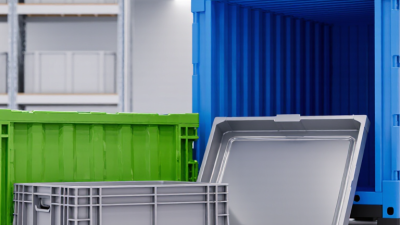
China’s corrugated packaging sector has become an important sourcing destination for durable, reusable, and moisture-resistant packaging. This introduction examines China’s leading Corrugated Box Plastic manufacturers, focusing on product quality, production experience, material choices, and export reliability. The goal is not to label one supplier as universally “best.” Buyer requirements differ significantly.
A capable manufacturer should explain its resin type, sheet structure, flute design, load performance, and testing process. It should also provide clear information about recycled content and production tolerances. In a real warehouse, small differences matter. A box may face rain, forklift pressure, repeated folding, or sharp product edges. Factory visits, sample testing, and documented quality records can reveal more than attractive catalog images.
Ellen MacArthur, a widely recognized circular-economy authority, stated, “Plastic pollution is a symptom of a system out of control.” Her observation deserves attention in this industry. Plastic corrugated packaging can reduce product damage and support repeated use, yet poor recovery systems may create unnecessary waste. The better question is not simply whether a factory offers low prices. It is whether its design supports long service life, practical reuse, responsible material selection, and eventual recycling.
This review considers manufacturing capability, customization, certifications, communication, and after-sales support. Some rankings may change. Market data can become outdated. Supplier claims also require verification. That imperfection is important. Careful buyers should compare samples, inspect test reports, and confirm production capacity before making a long-term decision.
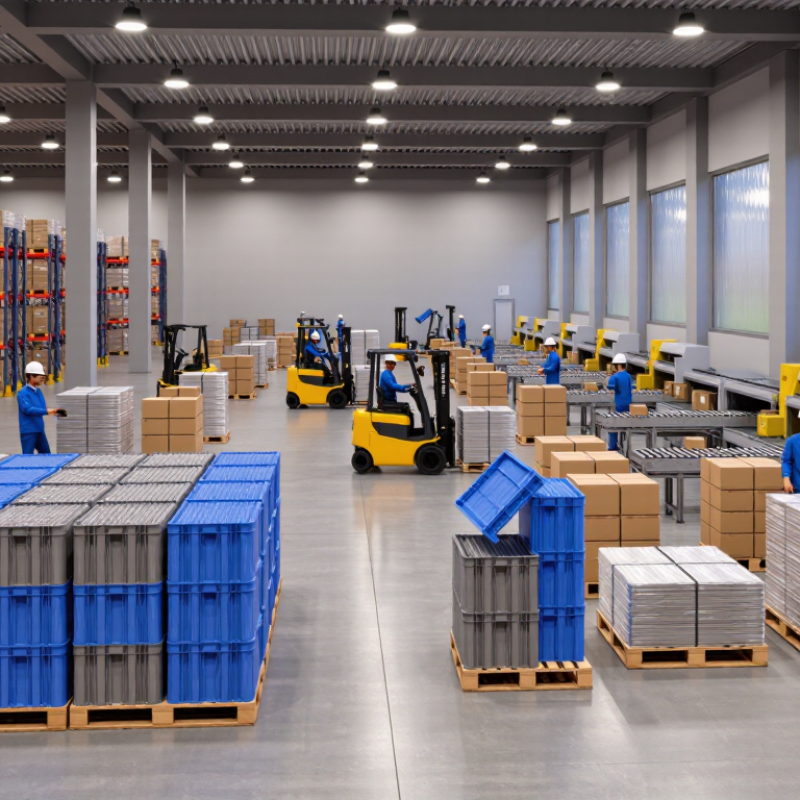
Corrugated box plastic manufacturers produce lightweight packaging from fluted plastic sheets, usually made from polypropylene. These sheets contain parallel ribs between two flat surfaces. The structure gives the box stiffness without adding much weight. Unlike ordinary cardboard, corrugated plastic resists moisture, splashes, and repeated handling. Manufacturers typically extrude the sheets, cut them to size, crease folding lines, and join the panels through heat welding or plastic fasteners.
Experienced manufacturers also adjust flute thickness, sheet density, color, and surface finish for each application. A produce distributor may need washable containers, while an electronics supplier may require antistatic protection. Some boxes include hand holes, lids, dividers, or reinforced corners. Quality teams should inspect dimensions, folding accuracy, edge strength, and load performance. They may also test exposure to cold storage, sunlight, and vibration. Small errors matter. A weak crease can split after several delivery cycles.
Reliable production depends on traceable material records, consistent machine settings, and clear inspection standards. Buyers should request sample boxes before ordering large quantities. They can check whether the lid closes smoothly and whether stacked boxes remain stable. Price alone can mislead. A cheaper sheet may deform under heat or repeated use. No factory gets every detail right. Manufacturers should review failed samples honestly and improve tooling, material selection, or worker training. This practical feedback often separates a dependable supplier from a merely capable one.
China’s manufacturers produce corrugated plastic boxes through controlled extrusion and fabrication. Polypropylene resin is melted and pressed into twin-wall sheets. Internal ribs create stiffness while keeping the box lightweight. The sheets are cooled, trimmed, and checked for thickness variation.
Computer-controlled knives then cut panels, slots, and folding lines. Workers may add ultrasonic welding, rivets, or plastic hinges, depending on the design. Flexographic printing can add handling marks, but ink adhesion must be tested on every sheet type. China’s National Bureau of Statistics reported about 74.9 million tonnes of plastic products output in 2023. That figure covers many products, not only packaging, but it shows the scale of the processing sector. Smithers also reported that the global corrugated packaging market exceeded US$200 billion in 2023. Demand is pushing factories toward faster, more consistent production.
Tips: Request a sample before mass production. Measure sheet thickness at several points. Check fold recovery after repeated use. Ask for drop, compression, and moisture tests. Small details matter.
Quality teams inspect dimensions, weld strength, surface cleanliness, and print clarity. They often use calibrated gauges and compression machines. Still, production is not perfectly uniform. Heat, recycled content, and storage conditions can change stiffness. A box that performs well in a factory may weaken after weeks in a hot warehouse. Manufacturers should record resin batches and test finished boxes under realistic conditions. That step is sometimes overlooked. It deserves more attention.
China’s corrugated plastic box manufacturers commonly use polypropylene (PP) sheets with a fluted inner core. This structure keeps boxes light while providing useful impact resistance. Twin-wall sheets suit general packaging, while thicker triple-wall sheets handle heavier loads. Some manufacturers add recycled PP, but the percentage must be checked carefully because it can affect stiffness, color, and folding performance.
Extrusion forms the hollow sheet continuously between heated rollers. Co-extrusion can place a tougher outer layer over a recycled inner core. For printed surfaces, corona treatment improves ink adhesion. Manufacturers may use flexographic, screen, or digital printing, depending on order volume and image detail. CNC routing, die cutting, and heated blade cutting create accurate panels and ventilation holes. Heat welding and plastic rivets are common assembly methods.
Quality control should include sheet thickness, edge strength, moisture resistance, and fold-line accuracy. In practical inspections, small thickness variations can cause lids to close poorly. That detail is easy to miss. UV stabilizers help outdoor boxes, but they do not make plastic permanently weatherproof. Antistatic additives may support electronics packaging, although performance depends on humidity and handling. I would also question broad claims about “fully recyclable” boxes, because coatings, inks, and mixed materials can complicate actual recycling. Better results come from matching material grade and processing technology to load, temperature, printing needs, and repeated use.
China Top Corrugated Box Plastic Manufacturers
How to Evaluate China’s Corrugated Box Plastic Suppliers
A reliable supplier should explain its plastic sheet specifications clearly. Ask about polymer type, thickness, sheet weight, flute structure, and recycled content. Request physical samples before discussing large volumes. Press one corner, fold the sheet, and inspect the cut edge. Weak sheets often show uneven flutes or brittle surfaces.
Review test records for compression strength, moisture resistance, impact performance, and dimensional stability. A professional factory should provide recent reports, not copied documents with unclear dates. Check quality procedures, production equipment, and batch traceability. Certifications such as ISO 9001 can support credibility, but they cannot replace your own inspection. A factory visit or independent audit gives stronger evidence.
Communication also reveals supplier reliability. Test whether the team answers technical questions directly and records changes accurately. Confirm mold fees, minimum order quantities, packaging details, lead times, and replacement policies in writing. Ask for a trial order with clear acceptance standards. This reduces risk. A common mistake is choosing the lowest quotation too quickly. Low pricing may hide thinner material, unstable color, or poor packing. Even experienced buyers can overlook these details. Supplier evaluation is not perfect, so keep inspection records and review performance after every shipment.
Supplier evaluation criteria and practical benchmarks for corrugated polypropylene box manufacturers
| Evaluation Dimension | Suggested Weight | Practical Benchmark or Target | Evidence to Request |
|---|---|---|---|
| Material Composition | 12% | Virgin or controlled recycled polypropylene (PP) with a clearly declared material ratio. Material selection should match the required stiffness, impact resistance, weather exposure, and reuse cycle. | Material specification sheet, resin declaration, sample identification, and recycled-content documentation where applicable. |
| Sheet Thickness and Weight Control | 10% | Common corrugated PP sheet thicknesses include approximately 2–5 mm. Thickness and basis weight should remain within the tolerance agreed in the purchase specification. | Production specification, calibration records, thickness readings, basis-weight data, and inspection reports from multiple production lots. |
| Mechanical Strength | 15% | The finished box should meet the required load, stacking, bending, puncture, and impact performance for its intended application. Test methods should be defined before mass production. | Tensile testing based on ISO 527, flexural testing based on ISO 178, impact results, compression tests, and finished-box load-test records. |
| Dimensional Accuracy | 10% | Cutting, creasing, folding, and hole positions should be controlled against approved drawings. A practical commercial tolerance is often agreed by drawing, commonly around ±1–2 mm for cut dimensions depending on box size and design. | Approved CAD drawing, first-article inspection report, dimensional checklist, and measurement records from production samples. |
| Folding, Welding, and Assembly Quality | 10% | Folds should be clean without excessive whitening, cracking, or permanent deformation. Welded or riveted joints should remain secure during repeated handling and stacking. | Assembly samples, joint-strength test results, process photographs, and inspection criteria for folds, seams, handles, and closures. |
| Printing and Surface Finish | 8% | Printed graphics should have consistent color, registration, adhesion, and scratch resistance. The supplier should confirm the applicable printing process, such as flexographic or screen printing. | Color proof, approved golden sample, ink specification, adhesion test results, and production color-control records. |
| Environmental and Chemical Compliance | 10% | Products intended for regulated markets should be evaluated for applicable chemical restrictions, heavy metals, packaging requirements, and recycled-content claims. Food-contact use requires separate regulatory confirmation. | Recent third-party laboratory reports, declaration of conformity, restricted-substance declaration, and food-contact documentation when relevant. |
| Weather and Temperature Resistance | 7% | Outdoor applications should be assessed for UV exposure, color fading, brittleness, heat, and cold. Performance claims should be supported by a defined exposure period and test method. | UV-aging test results based on ISO 4892 or an agreed equivalent, temperature-cycle data, and outdoor-use recommendations. |
| Quality Management System | 8% | A documented quality system should cover incoming materials, in-process checks, final inspection, nonconforming-product control, corrective actions, and traceability. | Valid ISO 9001 certificate where available, quality manual, inspection plan, corrective-action records, and batch traceability examples. |
| Production Capacity and Equipment | 5% | The manufacturer should have suitable extrusion, printing, cutting, creasing, welding, and assembly capacity for the required product size and monthly volume. | Equipment list, production-flow chart, capacity calculation, maintenance records, and a live or recorded factory audit. |
| Minimum Order Quantity and Sampling | 3% | The supplier should state separate requirements for standard products, custom sizes, custom printing, tooling, and color matching. Pre-production samples should be available before the purchase order is finalized. | Written quotation, sample policy, tooling quotation, sample lead time, and approval procedure for pilot production. |
| Lead Time and Delivery Reliability | 5% | Lead time should be separated into sampling, tooling, production, and export preparation. Delivery performance should be evaluated using historical shipment records rather than promises alone. | Production schedule, on-time-delivery history, packing specification, shipping records, and agreed delay-compensation terms. |
| Packaging, Storage, and Export Protection | 2% | Finished products should be protected from crushing, moisture, contamination, and deformation during storage and transport. Packaging should support efficient container utilization. | Packing photographs, carton or pallet specifications, loading plan, storage instructions, and drop or handling-test records where required. |
| Technical Communication and After-Sales Support | 5% | The supplier should respond clearly to drawings, material questions, tolerances, test requirements, corrective actions, and engineering changes in written English. | Pre-sales response records, sample-development workflow, engineering-change procedure, complaint-response process, and named technical contact role. |
What Industries Use Corrugated Plastic Boxes?
Corrugated plastic boxes serve industries that need clean, reusable, and lightweight packaging. Agriculture uses them for harvesting vegetables, seedlings, and fresh produce. Their smooth surfaces resist moisture and make routine cleaning easier. They are not suitable for every crop or climate.
Automotive manufacturers use these boxes for clips, brackets, cables, and small replacement parts. The boxes help separate components during assembly and reduce surface damage. Electronics plants often use them for circuit boards, sensors, and protective inserts. Static-control materials may be necessary for sensitive products. Food processors can use them for secondary transport when hygiene procedures are clearly defined. Direct food contact requires careful material selection and process control.
Retail, warehousing, and e-commerce operations also depend on corrugated plastic containers. They store folded garments, packaged goods, return items, and inventory labels. Repeated use can lower packaging waste and improve handling consistency. However, the real benefit depends on return rates, cleaning routines, and storage conditions.
Construction suppliers use larger versions for tools, fittings, and lightweight panels. Healthcare logistics may use them for non-sterile supplies and organized internal transport. Selection should consider wall thickness, load weight, ventilation, temperature, and stacking height. A cheaper box can fail quickly under heavy pressure. Practical testing remains essential. Measure the box after repeated use, not only on the first day.
Corrugated plastic boxes are widely used where lightweight, moisture resistance, impact protection, and repeated reuse are important. The chart shows the number of common documented applications identified for each industry; it represents application variety rather than market share.