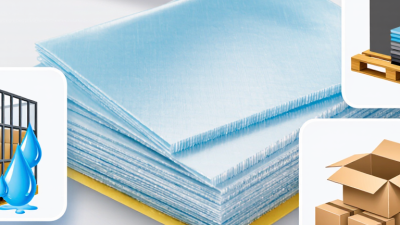
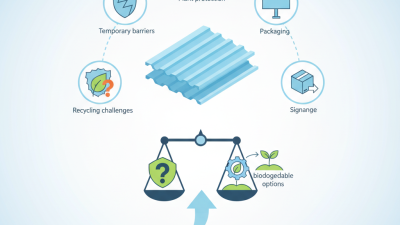
In 2026, global buyers need more than a thickness chart when selecting Corrugated Pp sheets. They must examine structure, resin quality, surface treatment, and intended use. Standard twin-wall sheets remain popular for cartons, dividers, and reusable packaging. Triple-wall designs offer greater stiffness for heavier loads. Honeycomb-core sheets can reduce weight, but their performance depends heavily on edge protection and production accuracy.
Other options deserve close attention. UV-stabilized Corrugated Pp supports outdoor applications, while anti-static grades suit sensitive electronic components. Flame-retardant sheets may serve demanding environments, subject to local safety requirements. Food-contact applications require verified documentation, clean manufacturing controls, and appropriate testing. Recycled-content sheets can support sustainability goals, although color consistency and impact strength may vary between suppliers.
Michael R. Wilson, a packaging engineer and materials consultant, says, “The best sheet is not the thickest; it is the one matched to the load, climate, and handling path.” That principle guides this 2026 overview. Buyers should compare grammage, flute geometry, impact resistance, moisture behavior, printability, and minimum order quantities. Supplier audits matter too. Ask for technical datasheets, sample panels, and recent test results. A glossy surface can look impressive. It does not prove durability.
The market is not perfectly tidy. Some specifications remain inconsistent across regions. Pricing also changes with polymer costs, freight rates, and production volume. Buyers may need to revise assumptions after testing. That is not failure. It is practical sourcing. This guide examines the leading Corrugated Pp types, their strengths, limitations, and fit for international procurement decisions.
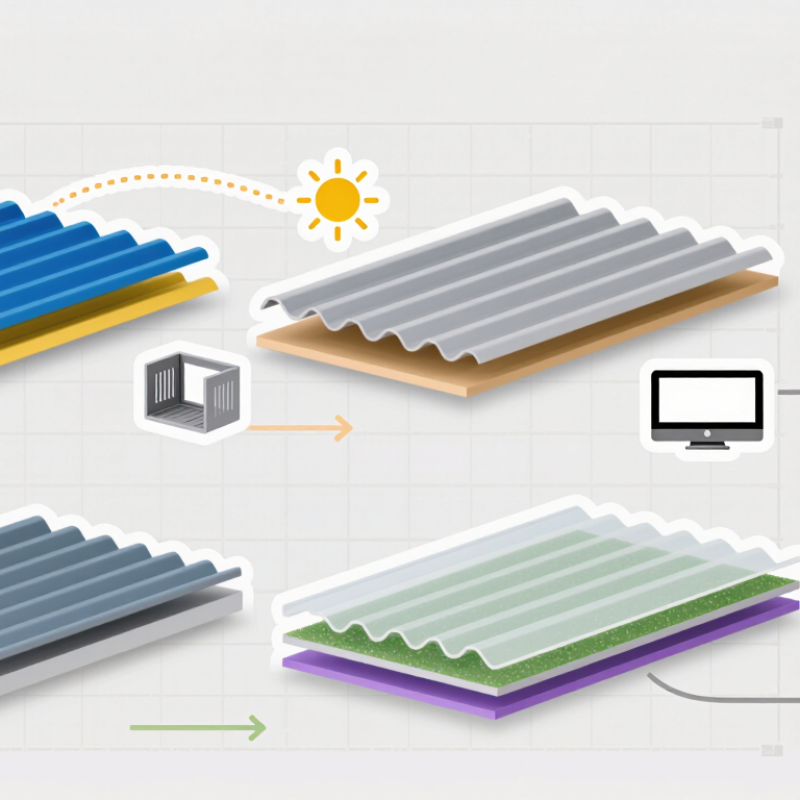
Corrugated PP sheets are lightweight plastic panels with a fluted core between two flat surfaces. They are also called twin-wall polypropylene sheets. The internal ribs create stiffness without adding excessive weight. This structure helps the sheet resist bending, moisture, and repeated handling. Common uses include packaging dividers, temporary signs, agricultural covers, and protective layers.
Manufacturing begins with polypropylene resin, often mixed with approved colorants or functional additives. The material is heated until it becomes uniform. An extrusion die then forms two outer layers and vertical ribs at the same time.
Cooling rollers stabilize the panel before trimming and cutting. Thickness, rib spacing, surface finish, and color can vary by application. A small temperature change may affect flatness. That detail is easy to underestimate.
Tips: Ask suppliers for thickness tolerance, sheet weight, impact data, and sample pieces. Check whether the flutes run in the strongest direction for your design. Inspect cut edges for crushed ribs and uneven cooling marks. For global purchasing, confirm packaging, moisture protection, and test methods before placing large orders. Numbers can look precise, but real performance still depends on storage, temperature, and handling. A sample test may reveal weaknesses that a specification sheet misses.
Corrugated PP sheet selection depends on the application, not only on thickness or price. Global buyers often choose twin-wall sheets for retail signs, lightweight dividers, and short-term packaging. They are easy to cut, print, and fold. For heavier loads, multi-wall sheets provide better stiffness and edge protection. This matters when boxes face stacking, vibration, or humid warehouses.
For reusable transport packaging, choose a sheet with consistent flute geometry and strong impact resistance. Automotive parts may need thicker sheets, reinforced edges, and custom die-cut inserts.
Agricultural users often prefer UV-stabilized grades for plant trays, produce bins, and outdoor covers. Without UV protection, sunlight can make the surface brittle. That failure is easy to overlook.
Protective floor and wall panels need a balance between rigidity and cleanability. A textured or coated surface can improve grip, but it may reduce print quality. Corrugated PP sheets with antistatic properties suit sensitive electronic components, provided testing confirms performance over time.
Do not rely on a single test report. Ask for thickness tolerance, weight, compression results, UV data, and recycled-content details. Local climate also changes the decision. A grade that performs well in a dry warehouse may warp under tropical heat and moisture. Buyers should review samples in real handling conditions, because laboratory results cannot reveal every practical weakness.
Thickness, flute structure, and surface finish determine how corrugated PP sheets behave in real shipping conditions. A thicker sheet usually improves compression resistance and edge protection, but it also increases weight, cost, and storage volume. A 3 mm sheet may suit lightweight dividers, while 5–8 mm sheets offer better cushioning for stacked goods. However, thickness alone can mislead. Poor flute alignment may reduce stiffness despite a larger measurement.
Flute geometry changes the balance between rigidity and flexibility. Smaller flutes create a smoother surface and better print support. Larger flutes provide stronger impact absorption and air space. For export packaging, buyers should compare compression, flexural strength, and dimensional stability after humidity exposure. ASTM D790 flexural testing and ASTM D638 tensile testing can support fair supplier comparisons. Real performance still depends on temperature, load direction, and processing quality.
Surface finish affects handling more than many specifications suggest. A matte texture can reduce glare and improve label adhesion. A smoother finish supports cleaner graphics but may become slippery when stacked. This matters because the OECD reported 353 million tonnes of plastic waste globally in 2019, with only 9% recycled. Recyclable design therefore deserves attention. Unnecessary coatings can complicate recovery. I would not choose the thickest sheet automatically. Testing the actual flute, load, finish, and climate remains safer than trusting a catalog number.
Global buyers should evaluate corrugated PP sheets by documented standards, not appearance alone. Ask for the material grade, thickness, weight per square meter, flute structure, and tolerance range. A sheet measuring 3.0 mm in one area and 2.7 mm elsewhere may fail during folding or die cutting. Request recent test reports for tensile strength, impact resistance, stiffness, and dimensional stability. ISO 527 or ASTM D638 may support tensile testing, but the applicable method depends on the product and destination.
Quality control should also cover moisture, warping, color consistency, surface cleanliness, and print adhesion. For outdoor packaging, ask whether UV-aging performance has been tested under a recognized method, such as ISO 4892. For regulated markets, verify declarations related to restricted substances and product safety. These documents should identify the resin type, test date, laboratory, and batch number. Vague certificates deserve caution.
A pre-shipment inspection can reveal blocked flutes, uneven edges, weak welding, or crushed corners. Check samples after stacking, bending, and temperature changes. A perfect sample may hide unstable production. This is easy to miss. Buyers should compare several batches, not just one carton. Traceability matters when sheets are used for reusable boxes, separators, or printed displays. Some suppliers report average values instead of minimum performance, which can mislead purchasing decisions. Clear acceptance criteria, retained samples, and an agreed inspection plan make quality disputes less likely. Still, no test covers every handling condition, so field feedback should influence the next order.
The percentages represent a practical procurement-priority model rather than mandatory certification limits. Global buyers should confirm thickness, cell uniformity, dimensional tolerance, tensile performance, impact resistance, density, and water absorption against the agreed product specification. Common verification references include ISO 527-3 for tensile properties of plastic films and sheets, ISO 178 for flexural properties, ASTM D256 for impact resistance, ISO 1183 or ASTM D792 for density, and ASTM D570 for water absorption.
When comparing corrugated PP sheet suppliers, buyers should examine usable value, not only the unit price. Request resin grade, sheet weight, flute profile, thickness tolerance, surface finish, and recycled-content details. A 3 mm sheet may look identical in photos but perform differently under load. Ask for recent test records, production samples, and packaging photos. Quality evidence matters more than polished sales language.
Cost comparisons should include tooling, cutting, printing, palletization, inspection, inland transport, duties, and possible waste. Calculate the delivered cost per usable square meter. I would also request prices at two volumes. A low-volume quote can hide expensive setup charges. A high-volume quote may create excess inventory. This is where buyers often misjudge the deal.
Shipping deserves equal attention. UNCTAD’s Review of Maritime Transport 2024 states that over 80% of global merchandise trade moves by sea. Ocean freight usually suits large, stable orders, while air freight may protect urgent launches but can distort margins. The World Bank’s 2023 Logistics Performance Index assesses customs, infrastructure, shipment ease, tracking, and timeliness. Buyers should compare these factors by destination, not assume every supplier offers the same route. Ask for carton dimensions, pallet height, loading photos, and a clear Incoterm. One detail still gets missed: damaged sheets are not cheap sheets.