500-1
500-2
500-3

Industry News

Look forward to sincere cooperation with every customer!

Why Choose PP Corrugated Sheet for Packaging?

Why Choose PP Corrugated Sheet for Packaging?

Pp Corrugated Sheet has become a practical option for modern packaging teams. It is lightweight, moisture-resistant, and easy to convert. These qualities matter when cartons face rain, warehouse dust, or repeated handling. A sheet can protect products without adding unnecessary transport weight.

Dr. Jay Singh, a packaging engineering specialist, describes the material clearly: “Good packaging protects the product while respecting the realities of storage, handling, and cost.” That view explains why many manufacturers consider Pp Corrugated Sheet for returnable boxes, layer pads, pallet separators, and display packaging. Its fluted core provides useful stiffness. Its smooth surfaces support printing, cutting, folding, and cleaning. Small design changes can also improve stacking performance.

The benefits are practical.

Yet, this material is not a perfect answer. Its performance depends on flute design, thickness, temperature, and loading conditions. A poorly selected sheet may bend under pressure. Reuse also requires inspection. Scratches, crushed edges, and contamination can reduce reliability. That part is easy to overlook.

Experienced packaging teams usually test samples before changing production materials. They measure compression strength, moisture exposure, drop resistance, and dimensional stability. They also review recycling access in the target market. PP can be recyclable, but collection systems differ widely. A responsible choice considers the full packaging journey, not only the purchase price. That honest evaluation helps companies choose where Pp Corrugated Sheet truly adds value.
Why Choose PP Corrugated Sheet for Packaging?

Material Profile: PP Density of 0.90–0.91 g/cm³ and Twin-Wall Design

PP corrugated sheet is a practical packaging material because its structure combines low weight with useful stiffness. Its density, typically 0.90–0.91 g/cm³, is lower than many solid plastic sheets. A 3 mm panel can feel surprisingly light in hand. That matters when workers move empty cartons, dividers, or protective inserts through a warehouse. Lower mass may reduce handling fatigue, although the final shipping weight depends on the whole package.

The twin-wall design uses two flat skins joined by internal ribs. These air channels increase thickness without adding a solid block of plastic. In practical trials, the sheet resists bending better when the ribs run across the load direction. Cut edges remain clean with a sharp blade, but careless scoring can weaken corners. The surface tolerates occasional splashes and can be wiped between uses, supporting returnable packaging routines. It does not make every package safer. Heavy concentrated loads can crush the flutes, especially near unsupported edges. I have found that thin sheets may flex more than expected during stacking. Designers should test filled samples, not only empty prototypes. Temperature, span length, fastening points, and repeated handling all deserve measurement before production.

Structural Efficiency: Fluted Geometry Delivers High Stiffness at Low Weight

Why Choose PP Corrugated Sheet for Packaging?

Structural Efficiency: Fluted Geometry Delivers High Stiffness at Low Weight

PP corrugated sheet uses a fluted inner core between two flat layers. This geometry increases stiffness without adding unnecessary material. The structure behaves like a small beam, distributing pressure across its surface. As a result, a lightweight sheet can protect products from bending, impact, and compression during handling. It is especially useful for dividers, protective sleeves, returnable boxes, and layered load supports. In practical packaging work, reduced weight can also make lifting and storage easier.

The design is efficient, but it is not magic. Large spans may still flex under concentrated loads. Edge protection and proper fold design matter. Sheet thickness, flute direction, product weight, and stacking height should be tested together. A simple trial with filled packaging often reveals weak points that calculations miss. That lesson is easy to overlook.

Tips: Align the flutes with the main load direction when possible. Use wide contact areas instead of sharp pressure points. Check samples after vibration, stacking, and temperature changes. Keep a small safety margin, because real handling is rarely perfect. For heavier products, add folded ribs or internal supports rather than selecting a much thicker sheet immediately. This can save material, though it may require more careful assembly. Measure the final package, not only the sheet itself. Efficient structure depends on the complete design.

Moisture Resistance: ASTM D570 Testing Shows Water Absorption Near 0.01%

Why Choose PP Corrugated Sheet for Packaging?

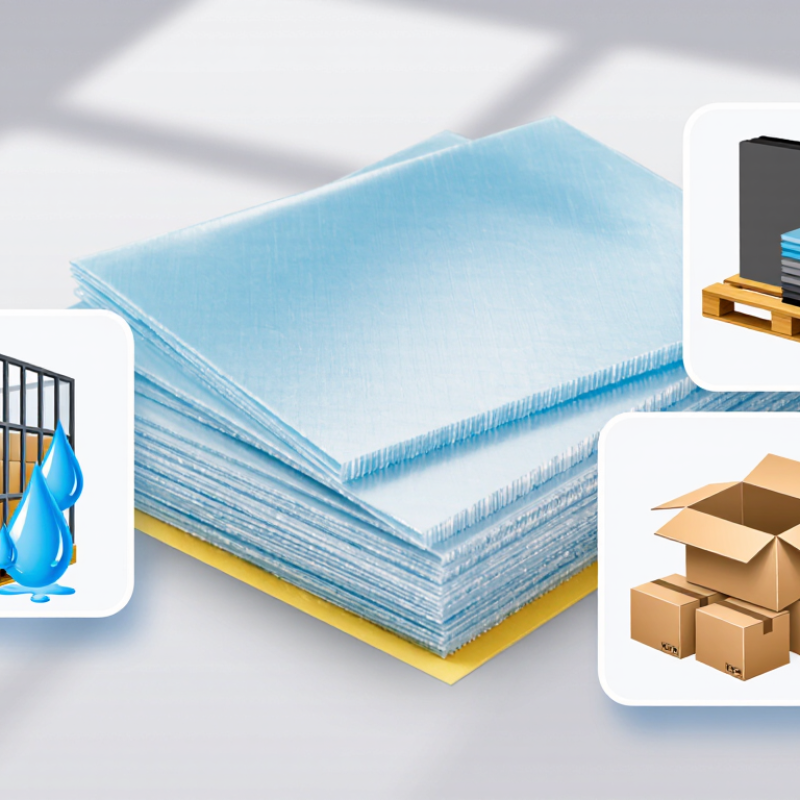
Moisture can quietly weaken packaging, especially during storage, transport, or humid warehouse handling. PP corrugated sheet offers a practical barrier against everyday water exposure. ASTM D570 testing shows water absorption near 0.01% under specified laboratory conditions. That result indicates very low moisture uptake. The sheet is less likely to swell, soften, or lose shape after brief contact with water. It also supports cleaner reuse when surfaces are wiped between applications. This matters for packaging that protects components, panels, or prepared goods.

Tips: Check the exact test conditions before comparing results. ASTM D570 outcomes can change with specimen thickness, conditioning, immersion time, and temperature. Ask for the complete test report, not only the percentage. In real packaging trials, inspect folded edges and cut surfaces carefully. Water may enter through damaged areas, even when the sheet itself absorbs very little.

A low laboratory result is not a complete field guarantee. Compression, punctures, condensation, and repeated handling still affect performance. PP corrugated sheet should match the load, closure method, and storage environment. I have seen packaging decisions focus too heavily on moisture resistance while overlooking impact protection. That is an easy mistake. A simple trial with damp cartons, stacked samples, and repeated opening can reveal weaknesses earlier. The material’s low absorption is valuable, but design details still decide whether the package performs reliably.

Distribution Protection: ASTM D4169 Evaluates Package Performance in Transit

Why Choose PP Corrugated Sheet for Packaging?

PP corrugated sheet can protect products while keeping package weight manageable. Its fluted core adds stiffness, and its plastic structure resists moisture during storage and transport. These features matter when cartons face damp loading docks, repeated handling, or uneven stacking. However, material strength alone does not prove package performance. ASTM D4169 evaluates the complete shipping system under simulated distribution hazards.

A suitable test plan reflects the intended distribution cycle and assurance level. Testing may include vehicle vibration, compression, drops, impacts, and concentrated handling forces. The package should contain the real product, or a close-weighted substitute. That detail matters. A PP corrugated design that survives a drop may still deform under prolonged stacking. Inspect the sheet, closures, corners, and product after every sequence. Small cracks can reveal larger design weaknesses.

In practical packaging trials, measure deformation before and after testing. Record panel bowing, flute collapse, moisture exposure, and product movement. PP corrugated sheet often performs well for reusable dividers, sleeves, trays, and protective cases. Yet it may need stronger folds, inserts, or edge reinforcement for heavy loads. Real handling is rough. A single successful test is not universal proof. Distribution routes change, and laboratory assumptions can miss warehouse shortcuts or seasonal humidity. Careful ASTM D4169 planning creates more reliable evidence for selecting thickness, structure, and protection levels.

Why Choose PP Corrugated Sheet for Packaging?

ASTM D4169 evaluates package performance through a sequence of distribution hazards, including conditioning, compression, vibration, shock, and final inspection. PP corrugated sheet can support lightweight, reusable packaging designs that help protect products during handling and transport.

The chart shows a typical ASTM D4169 evaluation flow. The exact test sequence, severity, and assurance level depend on the distribution cycle and package design.

Circularity: Resin Identification Code 5 Supports PP Recycling Pathways

PP corrugated sheet is a practical packaging choice for applications needing low weight, stiffness, and moisture resistance. Its fluted structure cushions products while using less material than many solid alternatives. A clean sheet can also be reused for returnable bins, layer pads, and protective dividers. That matters in warehouses where packaging faces repeated handling.

Resin Identification Code 5 identifies polypropylene and supports clearer sorting decisions. Polypropylene can enter mechanical recycling pathways when collection, sorting, and processing systems accept it. According to the OECD Global Plastics Outlook, only 9% of global plastic waste was ultimately recycled in 2019. That figure is sobering. Clear material identification helps, but it does not create recycling capacity by itself. A printed code is not a circularity guarantee.

In practical operations, remove labels, tape, food residue, and mixed-material attachments before recovery. Keep sheets dry and stack them separately from paper and other plastics. The U.S. Environmental Protection Agency reported an overall plastic recycling rate of 8.7% for municipal solid waste in 2018, showing why preparation and local acceptance remain important. Collection rules differ widely. Some facilities accept rigid polypropylene, while others do not. Packaging teams should verify local guidance before making environmental claims. Designing thinner sheets may reduce material use, yet excessive thinning can shorten service life and increase replacement waste. That trade-off deserves a second look.

Why Choose PP Corrugated Sheet for Packaging? – Circularity: Resin Identification Code 5 Supports PP Recycling Pathways

Data dimension Typical PP corrugated sheet data Packaging and circularity relevance
Resin identification code 5 – Polypropylene (PP) The code identifies the polymer family and helps sorting systems direct PP packaging into compatible recycling pathways. It does not, by itself, guarantee local recyclability.
Typical polymer density Approximately 0.90–0.91 g/cm³ for PP resin PP is less dense than water, which supports sink-float separation during some mechanical recycling processes. The final sheet density depends on the solid skin and fluted structure.
Melting range Approximately 160–171°C for common PP grades The thermoplastic structure can be remelted and reprocessed when the material is collected, sorted, and prepared appropriately.
Sheet construction Two relatively flat PP liners joined by internal PP ribs or flutes The hollow structure provides stiffness with lower material usage than a solid sheet of the same outside dimensions. Monomaterial construction can simplify recycling compared with multi-material laminates.
Moisture resistance High resistance to liquid water under normal packaging conditions The sheet does not readily absorb water like cellulose-based board, helping maintain structural performance in humid or wet handling environments.
Typical water absorption Very low; unfilled PP generally absorbs less than 0.1% water by weight over 24 hours at room temperature Low water uptake can reduce swelling and deformation. Actual performance varies with additives, fillers, processing, and test method.
Service-temperature consideration Common PP products are generally used in ambient and moderately elevated temperatures; performance declines as temperature approaches the softening range Packaging specifications should be validated for hot-fill, sterilization, vehicle interiors, and other high-temperature applications.
Material composition Best suited to recycling when made predominantly from PP and designed with limited incompatible components Avoiding permanent paper laminates, difficult-to-remove coatings, and incompatible polymer layers can improve sorting and recycling compatibility.
Collection and preparation Preferably clean, dry, flattened, and separated from non-PP materials Removing food residue, adhesives, metal parts, and other materials can reduce contamination and improve the value of recovered PP.
Mechanical recycling pathway Collection → sorting → size reduction → washing → drying → extrusion or pelletizing Recovered PP can be used in new molded or extruded products, subject to contamination, additive, color, and quality requirements.
Reusability potential Suitable for repeated use when the sheet remains clean and structurally intact Reuse before recycling can extend the functional life of the material and reduce the need for replacement packaging.
End-of-life qualification Recyclability depends on local collection, sorting, processing capacity, and product design Resin Identification Code 5 is a useful material identifier, but end-of-life claims should be verified against the specific recycling infrastructure available in the target market.

Technical note: Values are typical ranges for unfilled or conventional polypropylene resin and may vary with grade, additives, fillers, sheet thickness, flute geometry, processing conditions, and test method. Resin identification coding is commonly associated with ASTM D7611/D7611M.