Buying Corrugated Pp products globally requires more than comparing unit prices. Material grade, flute structure, sheet thickness, surface finish, and load performance can change the final cost significantly. A cheaper board may deform during ocean transport. It may also fail under humidity, stacking pressure, or repeated handling. Small specification gaps create expensive problems.
Packaging engineer Dr. Michael R. Wilson explains, “A reliable Corrugated Pp purchase begins with verified performance, not a persuasive quotation.” This principle shapes the ten buying tips in this guide. The discussion covers supplier audits, resin quality, recycled content, color consistency, tolerances, testing reports, and production capacity. It also considers packing density, container utilization, lead times, and after-sales support. Practical details matter. Ask for samples from actual production, not only showroom pieces. Request compression and water-resistance data. Check whether test conditions match your destination climate.
Do not trust every certificate blindly. Verify its issuer and testing method. That step is often skipped. It should not be.
Experienced buyers still make mistakes. They may focus on price and overlook tooling charges, minimum order quantities, or replacement delays. Some specifications remain unclear until the first shipment arrives. That is a costly lesson. A careful buyer records every requirement in writing and confirms acceptable tolerances before payment. This approach does not remove every risk. It makes risks visible, measurable, and easier to manage across borders.

Corrugated PP Buying Tips Every Global Buyer Needs
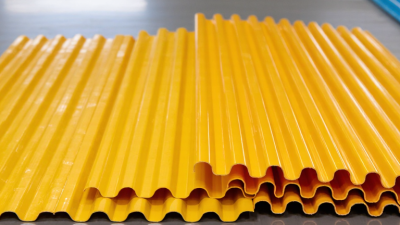
Corrugated polypropylene, or PP, is a lightweight sheet with two flat skins and internal flutes. Its structure provides stiffness without adding much weight. Common types include standard twin-wall sheets, heavy-duty panels, UV-stabilized grades, and anti-static versions. Some suppliers also offer flame-retardant or printable surfaces. Every additive changes performance, cost, and processing behavior.
Grade selection should begin with the application, not the color or lowest quotation. Thickness, flute profile, density, impact strength, and temperature resistance affect service life. A 3 mm sheet may suit retail dividers, while thicker panels handle reusable transport boxes. Outdoor signs need UV protection. Electronic components may require controlled static performance. For food-related contact, request current compliance documents and test conditions. Do not rely on a simple “food grade” statement.
Applications are broad. Converters use corrugated PP for layer pads, partition sets, sleeve packs, and returnable containers. Agriculture often uses it for harvest boxes and plant protection panels. Warehouses use printed sheets for floor protection and visual instructions. Check actual samples before approval. Measure thickness at several points, inspect flute bonding, and test folding after storage. A low price can hide weak edges or unstable color. I have seen attractive samples fail after repeated bending. That result deserves a second review, not an excuse. Specify tolerances, packing method, moisture exposure, and inspection records clearly.
Defining performance requirements is the foundation of every corrugated PP purchase. Start with the product’s real working environment, not only its appearance. Will the sheet protect goods during export, warehouse stacking, retail handling, or repeated reuse? Each condition changes the specification.
Measure the expected load, panel size, bending direction, and stacking duration. A lightweight divider may need flexibility, while a reusable box requires stronger flutes and reinforced edges. Consider temperature, moisture, dust, and exposure to sunlight. Corrugated PP resists water well, but prolonged heat can affect rigidity. That detail is easy to overlook.
Ask suppliers for test data that matches your application. Useful checks include compression strength, impact resistance, thickness tolerance, and folding performance. Request samples, then test them with your actual products and packing method. Do not rely on a catalog number alone. It may describe a laboratory result, not a shipping route.
Think about handling, too. Rough loading can damage corners before the material reaches its designed limit. A small trial shipment can reveal weak points that factory testing misses. We once assumed a thicker sheet would solve every problem; it improved stiffness but increased weight and storage cost. That was not the best trade-off. Review performance, cost, and practical usability together before fixing the final specification.
| No. | Intended Use | Recommended PP Structure | Typical Thickness | Key Performance Requirements | Suggested Acceptance Criteria | Relevant Test Method | Buying Tip |
|---|---|---|---|---|---|---|---|
| 1 | Retail signs and short-term displays | Single-wall fluted PP sheet with a smooth printable surface | 2–4 mm | Flatness, print adhesion, low weight, clean die-cutting | Uniform surface without visible sink marks, warping, or contamination; printed layer must resist normal handling | Visual inspection; dimensional measurement; cross-hatch adhesion testing such as ASTM D3359 where applicable | Request printed samples using the intended ink and finishing process. |
| 2 | Reusable produce and agricultural bins | Heavy-duty multi-wall or reinforced fluted PP panels | 4–10 mm | Moisture resistance, impact strength, cleanability, repeated-use durability | No cracking after drop and handling tests; no significant deformation after repeated washing or wet exposure | ASTM D5276 for drop testing; water exposure and cycle testing defined by the buyer | Specify wash temperature, detergent type, stacking height, and number of reuse cycles. |
| 3 | Temporary floor, wall, and surface protection | Rigid fluted PP sheet with high surface toughness | 3–6 mm | Abrasion resistance, load distribution, slip control, easy removal | Surface remains intact under expected foot traffic and light equipment movement; edges do not curl during intended service | Abrasion testing such as ASTM D4060; coefficient-of-friction testing where slip performance is critical | Select textured or coated surfaces when wet-floor traction is required. |
| 4 | Industrial layer pads and separators | Medium- to heavy-duty fluted PP sheet with controlled thickness | 2–5 mm | Compression resistance, dimensional consistency, product cleanliness | Panel must remain sufficiently flat under the specified stack load and must not shed particles onto packed goods | Compression testing such as ASTM D642; thickness measurement; cleanliness inspection | Define maximum load, support spacing, storage duration, and temperature before selecting thickness. |
| 5 | Returnable shipping totes and sleeves | Reinforced fluted PP panels with welded, stitched, or mechanically joined edges | 4–8 mm | Bending stiffness, corner strength, fold endurance, low moisture uptake | No joint separation or permanent collapse after the defined folding, filling, transport, and empty-return cycles | ASTM D790 for flexural properties; ASTM D5276 for drop testing; buyer-defined cycle testing | Test the complete assembled tote, not only the sheet material. |
| 6 | Outdoor construction and concrete-form protection | UV-stabilized, impact-resistant fluted PP sheet | 4–10 mm | Weathering resistance, impact strength, water resistance, dimensional stability | Color and mechanical properties must remain within the project specification after the stated outdoor exposure period | Accelerated weathering such as ASTM G154 or ISO 4892-3; impact testing as specified | Do not assume standard PP is UV-resistant; require documented UV additive or exposure performance. |
| 7 | Medical, pharmaceutical, and hygiene packaging | Clean, low-odor PP sheet with controlled additives and sealed edges where needed | 2–6 mm | Cleanliness, low extractables, odor control, traceability, consistent dimensions | Material must meet the buyer’s applicable regulatory, cleanliness, and packaging-contact requirements | Material-specific chemical, extractables, odor, and biocompatibility tests as applicable | Request a declaration of composition, lot traceability, and compliance documentation. |
| 8 | Automotive and heavy equipment packaging | High-stiffness fluted PP with reinforced edges or laminated protective layers | 4–8 mm | Impact resistance, vibration tolerance, abrasion resistance, oil and moisture resistance | No puncture, tearing, or loss of protective fit after the defined vibration, impact, and handling sequence | ASTM D4169 or ISTA protocols for packaged-product distribution testing, as applicable | Validate packaging with the actual part geometry, mass, and transport route. |
| 9 | Printed election, event, and outdoor campaign boards | Printable fluted PP with UV-resistant ink system or protective coating | 3–5 mm | Print quality, color stability, wind resistance, moisture resistance | Graphics remain legible and securely bonded during the specified outdoor service period | Color measurement such as ISO 13655; adhesion and accelerated weathering tests where required | Approve a production-color proof and define acceptable color tolerance before mass production. |
| 10 | Recycling and circular-use programs | Monomaterial PP sheet with clearly identified composition and minimal non-PP attachments | Application-dependent | Material identification, recyclability, contaminant control, consistent composition | Material declaration must identify polymer type, additives, coatings, adhesives, and any embedded components | Polymer identification such as FTIR; supplier declaration; applicable local recycling requirements | Confirm end-of-life handling in the destination market instead of relying only on a recycling symbol. |
Tip 1 Check the supplier before checking the price. Request the legal company name, factory address, production capacity, and export experience. A responsive sales team is useful, but technical answers matter more. Ask who controls resin selection, extrusion settings, and final inspection.
Tip 2 Inspect samples under practical conditions. Measure sheet thickness, weight, flute height, flatness, and edge quality. Bend the sheet repeatedly. Check whether the flutes collapse or recover. Compare samples from different batches, not only one polished piece. A clean sample can still hide unstable production. This is easy to overlook.
Tip 3 Define quality tolerances in writing. Include thickness range, color limits, dimensions, moisture exposure, impact performance, and printing adhesion. Photos cannot replace measurements. Ask for a batch inspection report with lot numbers and test dates. If the supplier avoids specific figures, treat that as a warning.
Tip 4 Verify certifications independently. Request the certificate number, issuing body, covered site, product scope, and expiry date. ISO 9001 may indicate controlled processes, but it does not guarantee every sheet is suitable. For regulated markets, confirm relevant material declarations and laboratory reports. Check whether testing covers the exact grade and additives ordered. Certificates are not magic. A common mistake is trusting a logo without checking its scope. Consider an independent pre-shipment inspection, especially for the first order. That extra cost may prevent warped panels, mixed colors, or incorrect thickness from reaching your warehouse.
Corrugated PP purchasing starts with a realistic price comparison. Request quotes using identical sheet thickness, size, color, flute structure, and printing requirements. A low unit price may exclude tooling, packing, testing, or inland delivery. Ask for a complete landed-cost estimate. It is more useful. Compare at least three suppliers and check how price changes at different order quantities. Larger volumes often reduce production costs, but excess stock can damage cash flow. Consider a trial order before committing to a full container.
Minimum order quantities deserve careful attention. Some factories set minimums by color, thickness, or printed design. Combining similar specifications may reduce unused capacity, although this is not always available. Confirm production lead time in writing, including approval, material preparation, manufacturing, inspection, and packing. Ten working days may sound attractive. It may exclude public holidays or delayed artwork approval. I have seen buyers plan from the shipping date instead of the production date, and the schedule failed quickly.
Shipping terms can change the final purchase decision. Compare EXW, FOB, CIF, and DDP only when the included services are clearly defined. Check port charges, export documents, insurance, destination handling, and possible storage fees. Ask whether goods ship by carton, pallet, or container, because packaging affects usable space. Confirm the estimated vessel schedule, transshipment risk, and delivery window. A small freight saving may be meaningless if the cargo arrives two weeks late. Recheck every assumption before payment. That extra review is inconvenient, but it prevents expensive surprises.
A sample should answer practical questions, not merely look clean. Request production-grade sheets, not showroom pieces. Check thickness, weight, flute structure, surface flatness, and edge quality. Measure several points with calibrated tools. ASTM D638 can guide tensile testing, while ASTM D570 supports water-absorption checks.
A sample can still mislead. Humidity, storage time, and recycled content may change performance. Record each result with photos, batch numbers, and test conditions.
Customization needs a controlled specification. Confirm sheet dimensions, color tolerance, printing adhesion, cutting accuracy, folding behavior, and load requirements. Ask for a signed drawing and a pre-production sample. Small changes matter. A 0.2-millimeter thickness difference can affect stiffness, weight, and packaging fit.
Avoid approving color from a digital screen alone. Request a physical color standard. In my experience, buyers often focus on appearance and under-test corner impact. That mistake becomes expensive during transport.
Long-term supply support requires evidence, not promises. Review monthly capacity, resin sourcing, backup equipment, lead-time records, and inspection procedures. Request corrective-action reports for previous defects. The OECD Global Plastics Outlook reports that 353 million tonnes of plastic waste were generated in 2019, with only 9% recycled.
Therefore, ask how production scrap is separated and managed. PlasticsEurope reported 400.3 million tonnes of global plastics production in 2022. These figures underline the need for traceable material planning. Build a quarterly review, but keep one assumption open: forecasts can fail. A second approved production route may protect your schedule.