500-1
500-2
500-3

Industry News

Look forward to sincere cooperation with every customer!

Best China Yellow Corrugated Plastic Supplier?

Choosing the best China Yellow Corrugated Plastic supplier requires more than comparing bright samples and low quotations. It requires evidence. Buyers should examine sheet thickness, flute structure, surface uniformity, printing performance, load resistance, and batch consistency. Yellow plastic can reveal defects quickly. Uneven color, weak edges, or cloudy surfaces are difficult to hide.

Industry research supports this careful approach. Reports from Grand View Research and Mordor Intelligence describe steady growth in the global corrugated plastic sheets market, driven by reusable packaging, retail displays, agriculture, and protective applications. However, market estimates differ because researchers classify sheets, boards, and finished products differently. That difference matters. A supplier’s claimed capacity may not equal reliable export production.

Sander Defruyt, a plastics circular-economy specialist at the Ellen MacArthur Foundation, has stated, “We cannot recycle our way out of the plastic pollution crisis.” His warning is relevant here. A responsible Yellow Corrugated Plastic supplier should discuss material selection, recyclability, production waste, and practical reuse. Ask for test records, not attractive promises. Request samples from several production batches. Check the color under daylight, warehouse lighting, and camera exposure. It sounds simple.

It is not always simple.

A strong supplier also explains limits honestly. Perhaps one factory offers excellent color control but limited custom tooling. Another may provide lower pricing but weaker quality documentation. The best choice depends on application, delivery risk, and long-term consistency. This guide evaluates China-based suppliers through those measurable factors, while recognizing one uncomfortable truth: no supplier is perfect, and every purchasing decision deserves verification.
Best China Yellow Corrugated Plastic Supplier?

What Is Yellow Corrugated Plastic and Where Is It Used?

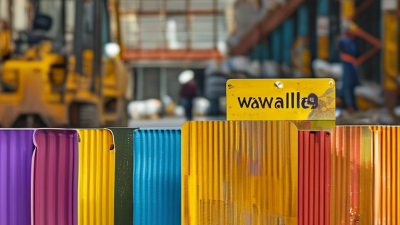
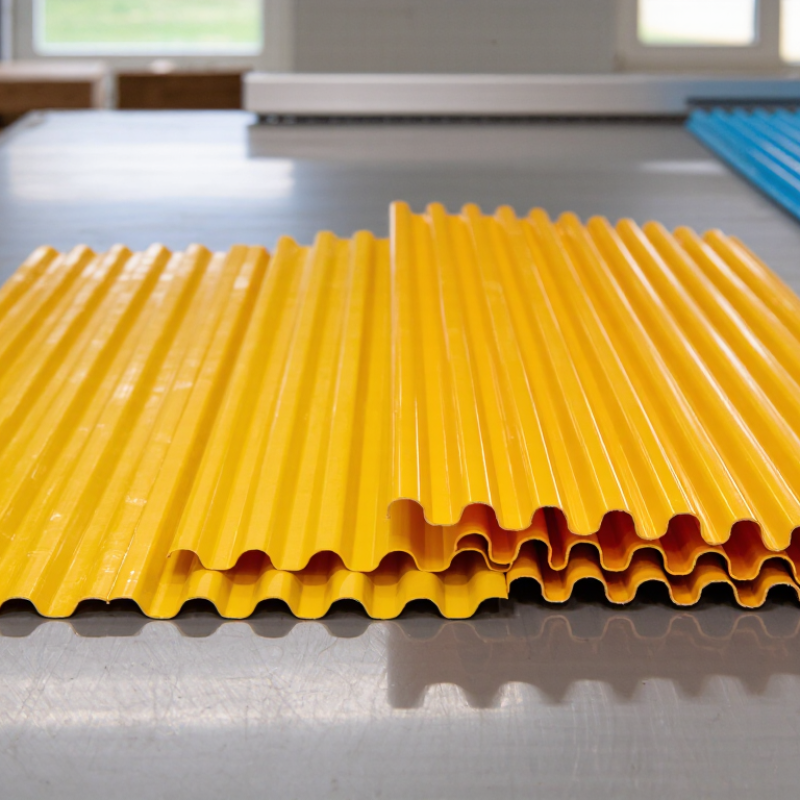
Yellow corrugated plastic is a lightweight sheet made from twin-wall polypropylene. Its internal flutes create small air channels between two smooth surfaces. Yellow pigment improves visibility, especially in busy warehouses, construction zones, and outdoor displays.

The material resists moisture, many common chemicals, and repeated handling. It can be cut with a utility knife, folded along the flutes, and printed for short-term signs. Typical uses include safety boards, election notices, concrete spacers, packaging dividers, agricultural labels, and temporary floor protection. A 4-millimeter sheet feels firm, while thinner sheets suit indoor signage and lightweight inserts. Outdoor projects need UV-treated material.

In practical sourcing, I would check color consistency, sheet flatness, flute direction, thickness tolerance, and printing adhesion. A reliable Chinese supplier should provide samples, technical data, and clear production records. Ask how the yellow shade changes after sunlight exposure. That detail matters.

It is not a perfect material.

The brightest yellow may show dust quickly. Deep folds can also weaken the sheet. I once saw a sign fail because its fasteners crushed the flutes, not because the plastic was defective. For demanding outdoor use, testing the exact thickness, ink, edge treatment, and fixing method is wiser than trusting a catalog image. Supplier claims still need verification.

Best China Yellow Corrugated Plastic Supplier? What Is Yellow Corrugated Plastic and Where Is It Used?

Yellow corrugated plastic is a lightweight, water-resistant polypropylene sheet with a fluted internal structure. Common thicknesses range from about 2 to 10 mm. Thinner sheets are often used for temporary signs and displays, while thicker sheets provide greater rigidity for packaging, dividers, floor protection, and reusable containers. Actual suitability depends on sheet density, flute structure, load, and environmental conditions.

What Makes a China Supplier Reliable for Yellow Corrugated Plastic?

A reliable China supplier for yellow corrugated plastic should prove performance, not only offer a bright sample. In factory purchasing, I check sheet thickness, weight, flute structure, color consistency, and impact resistance across several batches. A single approved sample is not enough. Production variation can appear after printing, cutting, or outdoor storage.

Industry data supports this cautious approach. Smithers’ 2024 report, The Future of Corrugated Packaging to 2029, identifies continued demand for lightweight, protective packaging materials. However, lightweight does not mean fragile. Suppliers should provide measurable specifications, including thickness tolerance, grammage, compression strength, and temperature resistance. Independent laboratory testing adds credibility. ISO 9001 certification can also indicate controlled processes, but certification alone proves little without current audit records and traceable batch documents. Ask for them.

Sustainability requires closer questions. The United Nations Environment Programme reported in 2023 that global plastic production exceeds 430 million tonnes annually. A responsible supplier should explain the resin type, recycled content, recyclability, and available waste controls. Claims need evidence. Even color masterbatch details matter, especially when yellow sheets must remain stable under sunlight. No supplier is perfect. I would still inspect factory conditions, compare three production batches, and request pre-shipment samples. A missed tolerance once may be understandable; repeated excuses are not.

How to Compare Product Quality, Customization, and Pricing

Choosing the best China yellow corrugated plastic supplier requires more than comparing quotations. Start with measurable quality. Request samples with stated thickness, basis weight, color tolerance, and impact performance. Check sheet edges, flute uniformity, surface flatness, and print adhesion under normal handling. A caliper test can reveal hidden variation. Ask for batch records and inspection reports, not only attractive sample photos.

Customization should match the application. Confirm cutting tolerances, fold-line accuracy, hole positions, printing coverage, and packaging protection. Define artwork approval, tooling ownership, minimum order quantity, and replacement terms in writing. ISO’s 2022 survey recorded over 1.2 million ISO 9001 certificates worldwide, but certification alone does not prove consistent sheet quality. Audit evidence matters more. Small details matter.

Pricing needs a landed-cost comparison. Include resin adjustments, tooling, cartons, inland transport, freight, duties, and defect allowances. UNEP reported that global plastic production exceeds 430 million tonnes annually, making resin volatility a practical concern. Ask whether the quotation uses virgin or recycled polypropylene, and request the percentage. Recycled content can reduce cost, but it may affect color stability and stiffness. Be careful here. A low ex-factory price may become expensive after rework, delayed delivery, or damaged pallets. Compare two or three trial orders before committing to annual volume.

Best China Yellow Corrugated Plastic Supplier? - How to Compare Product Quality, Customization, and Pricing

Practical benchmark for comparing yellow corrugated polypropylene sheet suppliers

Comparison Dimension Entry-Level Specification Mid-Range Specification Premium Specification What to Verify Before Ordering
Material Recycled polypropylene content may be included; suitable for short-term indoor use Predominantly polypropylene; suitable for general indoor and temporary outdoor applications Virgin or controlled-grade polypropylene with documented material consistency Request the resin type, recycled-content percentage, and material declaration
Common Thickness 2.0–3.0 mm 3.0–5.0 mm 5.0–10.0 mm Measure samples at several points; confirm thickness tolerance in writing
Typical Sheet Weight Approximately 250–500 g/m² Approximately 450–900 g/m² Approximately 800–1,800 g/m² Compare weight per square metre, flute structure, and actual usable area
Yellow Color Consistency Basic color matching; visible batch variation may occur More consistent yellow appearance with an agreed color reference Controlled color masterbatch and documented color tolerance Approve a physical color sample and define acceptable color deviation
Surface Flatness Suitable for simple signs, separators, and packaging inserts Generally flat for printing, die-cutting, and folding Tighter flatness control for large-format graphics and precision fabrication Check edge curling, waviness, dents, and storage-related deformation
Printing Compatibility Basic screen or digital printing after surface treatment Suitable for UV, screen, and selected digital printing processes Consistent corona treatment and surface energy control for demanding graphics Confirm dyne level, ink compatibility, print adhesion, and rub resistance
Customization Options Standard yellow sheets with limited size options Custom dimensions, printing, creasing, eyelets, and simple die-cut shapes Custom structure, multi-step fabrication, protective coating, and complex tooling Request a production drawing, tolerance sheet, tooling charge, and sample approval process
Standard Sheet Sizes Common widths and lengths, often around 1,220 × 2,440 mm Common widths up to approximately 2,100 mm, depending on equipment Wide-format and cut-to-size production subject to machine capability Confirm maximum width, cut accuracy, packing dimensions, and container loading plan
Weather Resistance Limited outdoor durability without UV additives Suitable for temporary outdoor use when UV protection is specified UV-stabilized grades available for longer outdoor exposure Ask for UV additive details and test data; define expected service life and climate
Indicative Price Range Approximately US$0.80–1.80/m² for basic sheets at volume Approximately US$1.50–3.50/m² for common custom specifications Approximately US$3.00–8.00+/m² for heavy, treated, printed, or fabricated products Compare the same thickness, weight, quantity, Incoterm, printing, packaging, and tooling terms
Typical MOQ Approximately 100–500 m² for stock or standard colors Approximately 500–2,000 m² for custom sizes or printing Approximately 1,000–5,000 m² for special materials or complex processing Confirm whether MOQ applies per color, thickness, size, artwork, or production batch
Sample and Lead Time Stock samples in 3–7 days; bulk production commonly 7–15 days Printed or fabricated samples in 5–12 days; bulk production commonly 15–25 days Tooling and approval may require 10–20 days; bulk production commonly 20–35 days Get a written schedule covering artwork approval, sampling, production, inspection, and dispatch
Quality Documentation Basic inspection report may be available Batch inspection records and dimensional reports commonly available Formal quality plan, traceability, test reports, and pre-shipment inspection support Request a sample inspection report, certificate of conformity, and defect acceptance standard
Best-Fit Applications Temporary signs, packaging dividers, protection boards, and event displays Retail signage, reusable boxes, agricultural boards, and general fabrication Longer-life outdoor signage, industrial partitions, reusable logistics systems, and complex displays Match the specification to load, exposure, reuse cycles, printing needs, and required appearance
Purchasing Note: Price ranges are indicative benchmarks for yellow corrugated polypropylene sheets and can vary with resin grade, thickness, sheet size, printing, tooling, order quantity, packaging, shipping terms, and seasonal material costs. Always compare approved samples and written specifications before selecting a supplier.
Quality Priority
Verify thickness, weight, flatness, color consistency, printing adhesion, and UV performance.
Customization Priority
Confirm drawings, tolerances, sample approval, finishing options, tooling, and production limits.
Pricing Priority
Compare total landed cost rather than sheet price alone, including tooling, packaging, freight, and inspection.

Which Certifications and Quality Checks Should Buyers Require?

When choosing a China yellow corrugated plastic supplier, buyers should verify certificates before comparing prices. ISO 9001 is a useful baseline for documented quality control. The ISO Survey 2022 recorded 1,265,216 ISO 9001 certificates worldwide, showing its broad adoption. However, certification does not guarantee consistent sheet performance.

Request the current certificate, scope, factory address, and issuing body. Confirm that the scope covers plastic sheet production, not only trading activities. For environmental claims, ISO 14001 and material declarations can support responsible purchasing. If the sheets contact regulated markets, request RoHS or REACH test documentation when applicable. Do not accept copied certificates.

Quality checks should include thickness, weight, color, flute height, flatness, impact strength, and compression resistance. Require a batch inspection report with measured values and tolerances. A practical check uses samples from several production rolls, not one perfect sheet. ASTM D642 or ISO 12048 methods can help assess compression performance. ASTM D4169 may support distribution simulation for packaging applications.

Ask for retained samples and traceable batch numbers. Inspect yellow sheets under daylight for streaks, weak edges, and uneven cells. Small defects matter during die-cutting. I would also request third-party laboratory results for critical orders. Yet laboratory testing is not infallible; sampling can miss unstable production. An on-site audit remains valuable, even when paperwork looks complete.

How to Select the Best Supplier for Your Specific Project

Best China Yellow Corrugated Plastic Supplier?

How to Select the Best Supplier for Your Specific Project

Choosing the best China yellow corrugated plastic supplier depends on your project, not a generic product list. Define the sheet’s real purpose first. Packaging inserts, warehouse dividers, retail displays, and outdoor panels require different grades. Ask about polypropylene resin, flute thickness, sheet weight, color tolerance, and service life. A professional supplier should explain these choices clearly. Vague answers are a warning. Request samples cut to your planned size. Bend them by hand, inspect the edges, and compare colors under daylight. Small differences matter. Lightweight sheets may look attractive in photographs but buckle after repeated handling.

For a specific project, verify more than factory photographs. Request recent test records, dimensional tolerances, moisture performance, and inspection procedures. Confirm whether printing, die-cutting, welding, or custom colors are handled internally. A pilot order helps. It can reveal problems with packing, flatness, lead time, and communication. Measure every sample; memory is unreliable. Ask for a quotation, approved drawing, production schedule, and corrective-action process. Check how rejected sheets are replaced.

One honest limitation can be reassuring. For example, a supplier may admit that bright yellow can vary slightly between batches, then control it with an approved color sample. That sounds more credible than perfection claims.

Also confirm pallet dimensions, export packaging, and required documentation before production. Your project may fail during delivery, not extrusion.