500-1
500-2
500-3

Industry News

Look forward to sincere cooperation with every customer!

2026 Best PP Corrugated Box Suppliers for Global Buyers

Global buyers choosing a Pp Corrugated Box supplier need more than a low quotation. They need consistent dimensions, dependable production, and packaging suited to real handling conditions. A box crossing warehouses may face stacked loads, moisture, repeated movement, and changing temperatures. Small design differences can affect how well it protects goods and fits a shipment.

Material claims also deserve careful reading. The OECD’s Global Plastics Outlook (2022) estimates that global plastic waste reached 353 million tonnes in 2019, while only 9% was ultimately recycled. Those figures cover plastics broadly, not PP corrugated sheets specifically. That distinction matters. Buyers should ask suppliers for documented resin composition, recycled-content details, and any relevant test results, rather than relying on broad sustainability language.

This 2026 supplier guide focuses on practical checks: sheet thickness, flute structure, load requirements, printing quality, sample consistency, lead times, and export experience. Ask for a sample with the same board specification as the quoted product. Then check its fit, edges, and rigidity against your actual goods. A polished catalogue is not proof of production consistency. Nor does one supplier suit every order. Requirements vary by product, route, and handling method, and even a careful comparison can miss something. Use the shortlist as a starting point, verify claims directly, and confirm specifications in writing before placing a large order.

2026 Best PP Corrugated Box Suppliers for Global Buyers

Define PP Corrugated Boxes: Polypropylene Density Is About 0.90 g/cm³

PP corrugated boxes are made from polypropylene sheets shaped with a fluted, ribbed core. Polypropylene density is about 0.90 g/cm³, so the raw material is lighter than water by volume. A sheet can feel surprisingly light in the hand. That figure describes the polymer, not the finished box, which also includes air spaces, surface layers, and sometimes additives.

Density helps explain why these boxes are easy to lift and move, but it cannot predict load capacity by itself. The flute shape, sheet thickness, rib spacing, and box dimensions all matter. A thin panel may flex when stacked, even if its polymer has the expected density. Small details count. In practical sourcing, check the stated sheet thickness and compare samples under the same load and stacking conditions. A simple hand test is useful, but it is not enough.

For global buyers, ask suppliers to clarify whether the density figure refers to the base resin or a tested sheet. Manufacturing choices can change the finished board’s weight and stiffness. Moisture resistance is useful in damp handling environments, yet exposure to heat or prolonged sunlight may affect performance. Density is a starting point, not a quality grade. I would not choose a box from that number alone; a real sample sometimes reveals weaknesses that a neat specification misses.

Compare Suppliers by Sheet Thickness, Flute Design, and Load Capacity

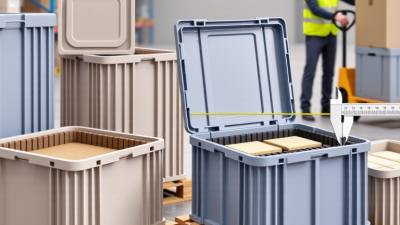
For global buyers, a PP corrugated box should be compared by its working performance, not thickness alone. Ask suppliers for the actual sheet thickness in millimeters and the tolerance across production batches. A 4 mm sheet may suit lightweight parts, while heavier components may need a thicker board or reinforced folds. Numbers help, but they do not tell the whole story.

Flute design affects stiffness, cushioning, and how well a box resists bending. Fine flutes can create a smoother surface for printed labels; deeper profiles may add rigidity but increase bulk. Request a sample with the same dimensions and closure style as your intended box. Press the panels by hand. Then inspect corners after folding. Small differences matter.

Load capacity needs context. Ask whether the supplier’s figure refers to a static load, repeated handling, or stacked boxes, and request test conditions where available. A box holding 20 kilograms on a bench may behave differently in a humid warehouse or during a long shipment. That part is often overlooked. Compare payload, box size, stacking height, and storage conditions together. If the supplier cannot explain the test setup, treat the rating as a starting point, not a guarantee.

Verify Box Strength with ASTM D642 Compression-Test Results

For global buyers comparing PP corrugated box suppliers, ASTM D642 results offer useful evidence of compression performance. Ask for the complete test report, not only a maximum-load figure. It should identify the box dimensions, wall construction, closure method, sample count, conditioning, and test orientation. Small design changes can alter results.

Check the reported force and units, then compare samples built to the same specification. A box tested with sealed flaps may perform differently from one with open flaps. Ask how the test setup reflects your storage and shipping conditions. D642 measures compression resistance under defined conditions; it does not predict every impact, vibration, or long-term stacking situation. Results can vary. That deserves a closer look.

Tips: Request recent results for your exact box design. Confirm whether failure meant buckling, corner collapse, or another limit. Keep a retained sample for comparison. If the report lacks setup details, ask for clarification before placing a large order.

Assess Transit Durability Using ASTM D5276 Drop and D4728 Vibration Tests

For global buyers, a PP corrugated box should be tested with its actual payload, closures, and packing method. ASTM D5276 evaluates loaded containers through controlled free-fall drops. Choose drop heights and orientations to reflect the shipment’s risks, rather than relying on a single dramatic impact. A corner-first drop can reveal weak joints or crushed edges. That matters.

ASTM D4728 assesses shipping containers under random vibration. It can expose panel fatigue, loose contents, and damage that a drop test may miss. Test the complete package, including inserts and straps, on a suitable vibration table. Record the test profile, duration, load condition, and visible changes. The box may survive intact while the products inside shift. Not quite a pass.

Compare results across samples made with the intended sheet thickness and flute structure. Note temperature and conditioning, since PP can respond differently across environments. One awkward gap remains: laboratory tests cannot reproduce every route, vehicle, or handling style. A pass is useful evidence, not a promise of damage-free delivery. Review failures carefully, even when they seem minor.

2026 Best PP Corrugated Box Suppliers for Global Buyers - Assess Transit Durability Using ASTM D5276 Drop and D4728 Vibration Tests

Use this supplier-evaluation matrix to compare documented capabilities. Test limits should be agreed for the specific box, payload, packaging configuration, and distribution route; ASTM test methods do not establish one universal pass threshold.

Evaluation area Information to request Relevant test or evidence Buyer acceptance basis
Material specification Resin type, sheet structure, thickness, mass per unit area, and any recycled-content claim; request tolerances and lot-level records. Material specification, inspection records, and representative sheet samples. Values and tolerances match the approved drawing and purchase specification.
Box design and payload Internal dimensions, closure method, handle or slot details, payload mass, product orientation, and stacking configuration. Approved drawings, a production-representative sample, and a documented packaging configuration. The tested sample represents the intended production box and packed shipment.
Free-fall drop durability Drop sequence, orientations, drop height, package mass, conditioning, and observed damage or product-function results. ASTM D5276, Standard Test Method for Drop Test of Loaded Containers by Free Fall. Agree the sequence and acceptance criteria in advance, including permitted box damage and product damage limits.
Random vibration durability Vibration spectrum, test duration, package orientation, restraint or support method, payload condition, and inspection results. ASTM D4728, Standard Test Method for Random Vibration Testing of Shipping Containers. Select the test profile and duration to represent the intended distribution environment; define pass/fail criteria before testing.
Test report quality Test date, sample identification, conditioning, equipment details, settings, photographs, deviations, and results. Complete reports for the actual box and representative packed payload; identify any test deviations. Report is traceable to the approved design and clearly records test conditions and outcomes.
Production consistency Incoming-material checks, in-process controls, finished-box inspection, traceability, and corrective-action process. Quality procedures, inspection records, sample records, and change-control documentation. Require notification and approval for changes to material, construction, tooling, or manufacturing location.
Global shipment readiness Packing configuration, palletization plan, shipment protection, export documentation support, and destination-specific requirements. Packaging drawings, pallet pattern, shipment photographs, and agreed shipping documents. Confirm the proposed pack-out fits the route, handling conditions, and buyer’s import and logistics requirements.

Comparison note: Request the same sample configuration, test plan, and reporting fields from every prospective supplier. Do not compare drop or vibration results unless the package, payload, conditioning, test settings, and acceptance criteria are comparable.

Rank Global Suppliers by ISO 9001, Lead Time, MOQ, and Landed Cost

2026 Best PP Corrugated Box Suppliers for Global Buyers

Rank Global Suppliers by ISO 9001, Lead Time, MOQ, and Landed Cost

A useful supplier ranking starts with evidence, not polished sales claims. Check that ISO 9001 certification covers the actual production site and relevant processes. Then request dated production schedules, sample inspection records, and written MOQ terms. Small test orders help reveal print variation, weak corners, or inconsistent sheet thickness. They also expose a practical trade-off: lower MOQs can mean higher unit prices.

Compare lead times from approved artwork to shipment, not just factory production. FEFCO’s 2023 industry data recorded 55.6 billion square metres of corrugated board production in Europe, showing the scale of this supply market. Scale alone proves little. Ask suppliers to separate production, packing, and port-delivery times, then verify estimates against recent orders.

For landed cost, include board price, tooling, inland transport, freight, insurance, duties, and destination handling. UNCTAD reports that maritime shipping carries over 80% of world trade by volume, so route changes can affect delivery and freight exposure. Build a like-for-like quotation sheet. Rank verified quality first, then compare realistic lead time, MOQ flexibility, and total delivered cost. A tidy score can still mislead; currency swings and port congestion may change the result before the next order.