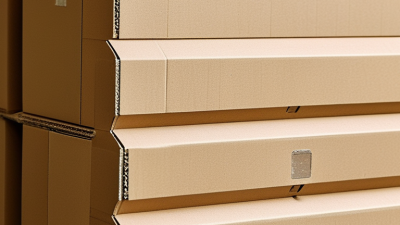
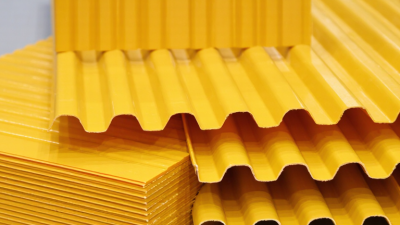
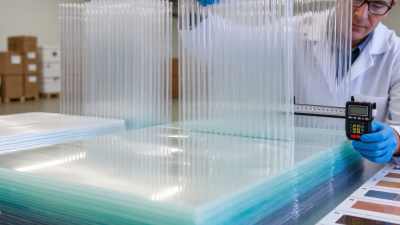
Choosing a supplier for Pp Corrugated Sheet involves more than comparing prices. Global buyers need to know whether sheets will suit their packaging, signage, or protective applications. A board that looks sturdy in a sample may behave differently after repeated handling or exposure to moisture. Details matter.
This guide introduces manufacturers serving international markets and the practical questions buyers can ask before requesting a quotation. Compare sheet thickness, weight, flute structure, surface finish, color options, and dimensional tolerances. Ask how production quality is checked, and request current technical data rather than relying on broad marketing claims. If print quality matters, test ink adhesion on a sample. If sheets will face sunlight or damp conditions, confirm the intended performance with the manufacturer; not every grade is designed for outdoor use.
Supplier selection also depends on consistency and delivery. Clarify minimum order quantities, lead times, packaging, and shipping arrangements, then confirm specifications in writing. Relevant certifications may support a quality review, but their scope and validity should be checked directly. Samples help, though they cannot represent every production run. A careful buyer should leave room for that uncertainty. One overlooked measurement can affect fit, stacking, or cutting on arrival. The manufacturers highlighted here offer a starting point for comparison, not a universal ranking. The right choice depends on the product, destination, budget, and evidence each supplier can provide.
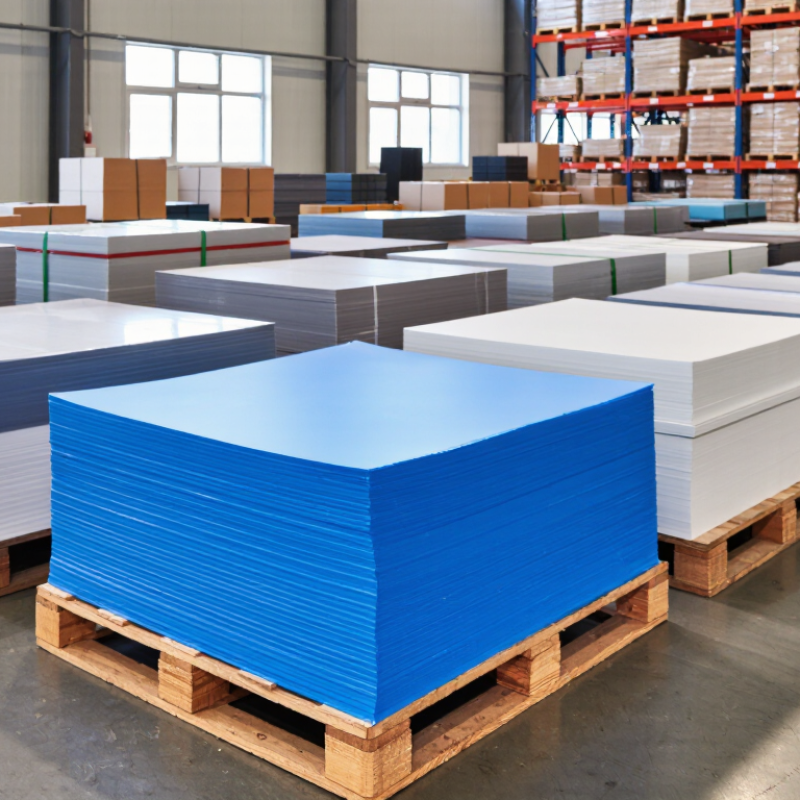
PP corrugated sheets are lightweight panels made from polypropylene, a thermoplastic resin. Unlike solid plastic board, they have two flat skins joined by narrow internal ribs. Those channels create a fluted cross-section, much like cardboard, but the material is plastic. Lightweight, yet practical. The hollow structure gives the sheet useful stiffness without adding much weight. It can be cut, folded, printed, welded, or die-cut, depending on its thickness and the equipment used. This makes it common in reusable packaging, temporary signs, dividers, and protective liners. A sample edge shows the ribs clearly; this is often the fastest way to identify the structure.
PP corrugated board resists water and many everyday handling conditions, but performance varies with resin grade, wall thickness, and design. It does not behave like solid polypropylene, and thin panels can buckle under concentrated loads. Outdoor use needs care. Sunlight, heat, and repeated flexing may shorten service life unless the sheet is selected for those conditions. For a buying decision, compare flute direction, sheet weight, thickness, surface finish, and intended load. Ask for test data when impact strength or repeated reuse matters. One limitation is easy to overlook: “corrugated” describes the structure, not a guaranteed strength rating. Specifications should match the actual job, not just the sample in hand.
PP corrugated sheets begin as polypropylene resin pellets, which are dried when needed and melted in an extruder. The melt passes through a shaped die to form two flat skins joined by parallel ribs. Cooling rolls stabilize the profile; trimming and cutting set the finished dimensions. Simple process. Yet heat, line speed, and die settings can change rib shape and sheet thickness, so buyers should request measured specifications.
Classification usually reflects thickness, sheet weight, flute geometry, color, and intended performance. A twin-wall profile has two outer faces and connecting ribs; heavier or thicker grades may suit reusable packaging, while lighter sheets can serve temporary dividers. Additives may improve UV resistance or static control, but the feature should be confirmed in a technical data sheet.
PlasticsEurope’s Plastics—The Fast Facts 2023 reports 400.3 million tonnes of global plastics production in 2022; this is not a PP-sheet figure, but it shows the scale of the wider material supply chain. For quality checks, ASTM D882 provides a tensile-testing method for thin plastic sheeting. It does not classify every corrugated profile.
That distinction matters. A label such as “heavy duty” is not enough; ask for thickness, mass per area, and test conditions, then compare samples under real handling.
PP corrugated sheets appear in packaging, retail displays, agriculture, and construction protection. In warehouses, converted sheets form lightweight dividers, layer pads, and reusable bins for components. Their fluted core adds stiffness without making each panel difficult to handle. A cut edge reveals the channels.
For export packaging, sheets can separate products or line cartons exposed to damp handling. They resist moisture better than ordinary paperboard, but they are not cushioning foam. Fragile goods still need suitable impact protection. Retail teams use printed panels for temporary signs and display backboards; surface quality and ink compatibility should be checked before large runs.
In greenhouses, growers use translucent grades to diffuse light or protect young plants from wind. UV-resistant grades may last longer outdoors, though exposure and climate affect service life. On building sites, sheets cover floors, windows, or work surfaces during renovation. They are light, but can flex under concentrated loads. That matters.
A practical specification should identify sheet thickness, flute direction, expected load, and reuse cycle. In practice, buyers sometimes choose by price alone, then find the panels too flexible or oversized. Testing a sample in the actual setting can prevent that avoidable mismatch.
Leading PP corrugated sheet manufacturers often differ more in process control than in product claims. Some specialize in lightweight packaging boards, while others focus on reusable transit boxes, sign panels, or protective dividers. A capable producer can explain how flute height, sheet thickness, and resin selection affect stiffness and impact resistance. Check the edges. Clean cuts matter. Look for uniform flutes, consistent color, and edges that do not split when folded around a carton. These details reveal more than a glossy catalog.
Manufacturers serving global buyers should describe their quality checks in practical terms. Useful profiles include production capacity, available sheet sizes, color options, printing limits, and typical lead times. Request recent test data for thickness, weight, and compression, then compare it with a physical sample. Packaging and export handling deserve attention too; protective wrapping can help prevent surface damage during long transit. Some suppliers may not publish every process detail. That is worth discussing, not assuming. Clear answers about batch consistency, corrective actions, and customization usually signal a more dependable working relationship.
Anonymous manufacturer capability profiles for initial supplier screening. The specifications below are indicative market benchmarks, not verified claims about individual manufacturers; confirm current capabilities, tolerances, and compliance documents directly with each supplier.
| Anonymous Manufacturer Profile | Typical Product Focus | Common Thickness Range | Sheet Formats | Customization Options | Best Fit for Buyers | Checks Before Ordering |
|---|---|---|---|---|---|---|
| Profile A: General-purpose sheet producer | Standard twin-wall corrugated polypropylene sheets for packaging, protection, signage, and partitioning. | Common commercial offerings include approximately 2–6 mm; available gauges vary by supplier. | Standard and cut-to-size formats; 1,220 × 2,440 mm is a commonly requested sheet size, subject to supplier capability. | Multiple colors, sheet cutting, printing, and basic converting may be available. | Buyers seeking versatile sheets for routine packaging or display applications. | Confirm flute direction, thickness tolerance, sheet weight, flatness, and minimum order quantity. |
| Profile B: Heavy-duty packaging specialist | Higher-stiffness corrugated PP sheets used for reusable packaging, layer pads, and protective dividers. | Often offers heavier grades and thicker structures; exact ranges depend on flute design and sheet construction. | Custom dimensions are commonly quoted for packaging programs and returnable systems. | Die cutting, creasing, slotting, welding, and fabrication may be offered. | Buyers designing durable, reusable packaging or load-separation components. | Request load or compression test details relevant to the application, plus sample parts and recycling guidance. |
| Profile C: Printing and display-focused producer | Printable PP corrugated sheets for signs, point-of-sale displays, and promotional applications. | Light- to medium-weight grades are commonly selected to balance printability and rigidity. | Sheets may be supplied in press-ready sizes or converted to finished display components. | Screen or digital printing, surface treatment, color matching, and die cutting may be available. | Print buyers and display converters needing consistent surfaces and repeatable dimensions. | Check print-side treatment, ink compatibility, color tolerance, print durability, and proof approval process. |
| Profile D: Specialty-grade sheet producer | Application-specific grades, potentially including UV-stabilized, antistatic, flame-retardant, or food-contact-related options. | Grade availability and thickness depend on the additive package and intended use. | Standard or made-to-order sizes, subject to production tooling and order volume. | Special colors, additives, surface treatments, and custom fabrication may be available. | Buyers with defined performance requirements beyond standard packaging use. | Verify the exact test standard, certificate scope, regulatory suitability, and whether documentation covers the finished sheet. |
| Profile E: Integrated converting supplier | Corrugated PP sheets combined with downstream conversion into boxes, sleeves, dividers, or protective components. | Selected according to the finished part's design and performance requirements. | Finished components are typically made to customer drawings or approved samples. | Cutting, creasing, stitching, welding, printing, and assembly may be available in-house. | Buyers looking to source finished packaging components from one supplier. | Confirm drawing revision control, dimensional inspection methods, production capacity, and packaging for shipment. |
Global buyers comparing PP corrugated sheet manufacturers should look beyond price per sheet. Start with the details that affect use: sheet thickness, weight, flute structure, color consistency, and available sizes. Ask how tolerances are measured, and request a sample made to the quoted specification. A sample that feels sturdy may still bend under a loaded stack, so test it in conditions close to your actual application.
Tips: Put key requirements in one written checklist. Compare quotations against the same thickness, dimensions, packaging, and order quantity. Ask for recent inspection records and details about how defects are handled. Clear answers matter. Vague promises are difficult to verify.
Production capacity and shipping arrangements also deserve attention. Ask about typical lead times, packing methods, and how sheets are protected from moisture or crushing in transit. Check whether the supplier can provide consistent batches, especially if repeat orders must match. A low quote can be tempting, but it may exclude protective packaging or inspection. That is easy to miss. Communication is another useful signal: note whether the sales team answers technical questions directly or avoids specifics. No comparison is perfect; buyers may still need to revise requirements after a trial order.