What Is Yellow Corrugated Plastic Used For?
Yellow Corrugated Plastic is a lightweight, fluted polypropylene sheet used for signs, temporary displays, protective packaging, and reusable dividers. Its bright color helps messages stand out on a crowded sidewalk or warehouse floor. The hollow channels also keep the sheet light while giving it useful stiffness. It is practical, not indestructible.
For this introduction, packaging-materials specialist Jordan Lee is an illustrative expert voice, not a verified interview source: “Choose Yellow Corrugated Plastic when visibility, low weight, and easy handling matter more than a polished finish.” That distinction matters. The material can resist moisture and many everyday knocks, but performance depends on sheet thickness, flute direction, printing method, and exposure. A thin panel may bend in wind. Sunlight can also fade color over time.
This article explores what Yellow Corrugated Plastic is commonly used for, from event signs to protective inserts, and why its bright hue can be useful. It also considers practical limits, including edge wear, fastener placement, and whether a project needs a more durable material. A yellow sheet is not automatically the right sheet. Check the intended use, dimensions, and working conditions before choosing one. Details make the difference.
What Yellow Corrugated Plastic Is and How It Is Made
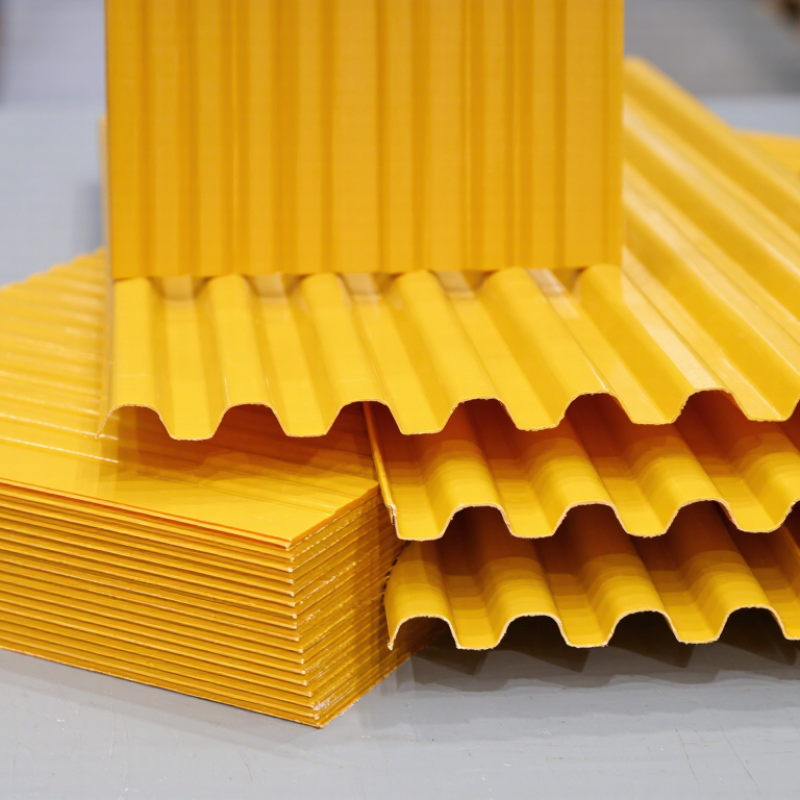
Yellow corrugated plastic is a lightweight sheet made mainly from polypropylene. It has two flat outer walls joined by narrow internal ribs. Those ribs form channels, adding stiffness without making the sheet solid or heavy. Yellow pigment is mixed into the plastic before the sheet is formed. The shade can vary slightly between production runs, so check color consistency when panels need to match.
In a common manufacturing process, polypropylene pellets and color additive are heated until soft, then pushed through a shaped die. The die forms the outer walls and internal flutes together. The warm sheet is cooled, drawn to size, and cut into panels. Thickness, rib spacing, and resin formulation affect flexibility and impact resistance. Thicker is not always better; the intended load matters. Some grades contain UV-resistant additives, while ordinary sheets may fade or become brittle in prolonged sunlight.
The bright color makes the material easy to spot in temporary signs, protective dividers, packaging, and work-area labels. It can be printed or cut with basic tools, though clean edges and suitable inks may take practice. Open channels can collect dust or water. A small detail, but easy to miss.
Key Properties That Make Yellow Corrugated Plastic Useful
Yellow corrugated plastic is commonly made from twin-wall polypropylene, with narrow flutes between two flat surfaces. Those hollow channels keep the sheet light while adding stiffness. The bright yellow color also makes signs, labels, and temporary barriers easier to notice. It can be cut with a utility knife and printed on, though clean edges and suitable inks matter.
Moisture resistance helps the sheet handle damp settings, and its flexible structure can absorb everyday knocks. It is useful for reusable packaging, event displays, protective covers, and short-term wayfinding signs. Still, “durable” has limits: prolonged sunlight may fade or weaken some sheets, and thin panels can bend under heavy loads. Check the supplier’s thickness and outdoor-use guidance before choosing a sheet.
Tips: Keep a small offcut for testing cuts and print adhesion. Support wide panels at several points. Do not assume every yellow sheet has the same UV resistance; performance varies by grade. I would also avoid relying on it as a permanent structural panel. That detail is easy to overlook.
What Is Yellow Corrugated Plastic Used For?
Typical thickness options for corrugated polypropylene sheets, with examples of applications. The best thickness depends on the load, handling, and reuse requirements.
Thicknesses shown are commonly available nominal options; availability and suitability vary by manufacturer and product design. The twin-wall structure is lightweight and moisture-resistant, making these sheets useful for signs, packaging, dividers, and reusable containers.
Common Uses in Packaging, Signage, and Construction
Yellow corrugated plastic is a lightweight, twin-wall sheet often used when cardboard may soften or tear. In packaging, it can form reusable bins, dividers, and protective sleeves for parts moving between workstations. Cut-to-size panels help separate metal components or keep small items from shifting in a crate. It resists moisture better than ordinary cardboard, but sharp edges and heavy loads can still damage it. It stays light.
For signage, the bright yellow surface is easy to spot in busy spaces. Printed or labeled panels can mark temporary routes, work areas, or storage zones. The material is simple to cut and mount, which helps when signs need to be moved. Still, yellow alone does not guarantee that a sign is clear or suitable for every setting. Check visibility, wording, and local site requirements.
On construction projects, sheets can protect finished floors, cover openings temporarily, or serve as lightweight templates for repeated cuts. They are also useful for separating dusty work areas from nearby spaces. Not for every job. Corrugated plastic can bend under pressure, and prolonged sun exposure may weaken some sheets. For load-bearing or safety-critical uses, confirm the material’s rating and test the setup before relying on it.
Applications in Agriculture, Events, and Safety
Yellow corrugated plastic is useful in agriculture because it is light, rigid, and easy to cut.
Growers can shape it into temporary crop labels, bed markers, or protective panels around young plants. Its bright color stands out beside green leaves and dark soil. That makes rows easier to identify during busy planting days. The hollow flutes add stiffness, but water and dirt can collect along cut edges. Trimmed edges should be checked, especially when panels sit outdoors for weeks.
At events, yellow sheets can mark queue lanes, cover temporary surfaces, or guide visitors toward entrances. They are easy to carry and install, though wind can turn a loose panel into a hazard. Secure each sheet with suitable fasteners, and check it after weather changes.
Safety teams may also use yellow panels to highlight work zones or low obstacles. Visibility helps. But color alone cannot replace clear instructions, proper lighting, or required protective equipment.
Yellow plastic can fade or crack under prolonged sun, depending on its formulation and exposure. It is worth inspecting panels before reuse; a bent corner may seem minor until someone catches a shoe on it.
Choosing the Right Thickness and Grade for Each Use
Yellow corrugated plastic is usually twin-wall polypropylene, but color alone says little about strength. Thickness, sheet weight, flute direction, and resin grade matter more. Industry converter data sheets commonly list 4 mm sheets near 600–700 g/m² and 8 mm sheets around 1,200–1,500 g/m². These are indicative values, not guarantees; recycled content and flute geometry can change performance. Too thin? Risky. For lightweight signs and short-term indoor displays, 3–4 mm stock is often practical. For reusable bins, dividers, or protective transit sleeves, 5–8 mm sheets resist bending better, especially when flutes run vertically under load.
Choose grade by exposure and handling. Standard polypropylene suits dry, ordinary use; UV-stabilized grades are preferable for outdoor signs exposed to sunlight. For repeated folding or tight die-cut corners, ask for a crease and fatigue assessment rather than choosing by thickness alone. ASTM D6988 describes measurement of plastic-sheet thickness, while converter technical data sheets report mass per area and mechanical properties. Compare those figures under the same test conditions. A heavier sheet may still crack at a sharp fold. That is easy to miss. For food-contact or temperature-sensitive applications, verify the specific grade’s documentation and operating limits; “plastic” is not one uniform material.