How to Choose the Best Corrugated Plastic Sign in 2026?
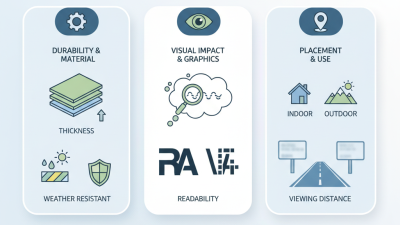
Choosing the best Corrugated Plastic Sign in 2026 requires more than comparing prices. The right board must fit the message, location, weather, and expected service life. A temporary open-house sign needs different protection than a year-long construction notice. Start with the setting. Measure the mounting area, viewing distance, wind exposure, and sunlight direction. Then choose a suitable flute thickness and size. A thin sheet may bend beside a busy road. A thicker sheet may be unnecessary indoors.
Sign-industry consultant David Hickey advises, “The best sign is the one that communicates clearly in its actual environment.” That principle remains practical. Check whether the printer uses UV-resistant inks, clean edges, strong grommets, and weather-suitable stakes. Inspect a sample under daylight. Small text can disappear quickly from twenty feet away. High contrast usually performs better than decorative detail. A matte surface may reduce glare near windows or parking lots.
Material quality matters too. Ask whether the Corrugated Plastic Sign uses consistent fluting and recyclable polypropylene. Confirm the expected lifespan, cleaning method, and replacement process. Supplier claims still need testing. A “durable” sign can fail when its corners curl or its stakes loosen after rain. I have seen attractive signs become unreadable because the design favored style over distance. That is an easy mistake to repeat.
The strongest choice balances clarity, structure, print quality, and cost. Do not buy the thickest sheet automatically. Do not trust the lowest quote blindly. Review the finished sample, not only the product photograph. A careful decision may take longer, but it prevents wasted signs, weak impressions, and avoidable replacement costs.
What Is a Corrugated Plastic Sign and Where Is It Used?
How to Choose the Best Corrugated Plastic Sign in 2026?
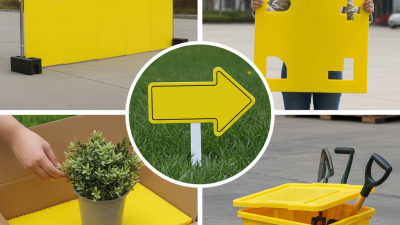
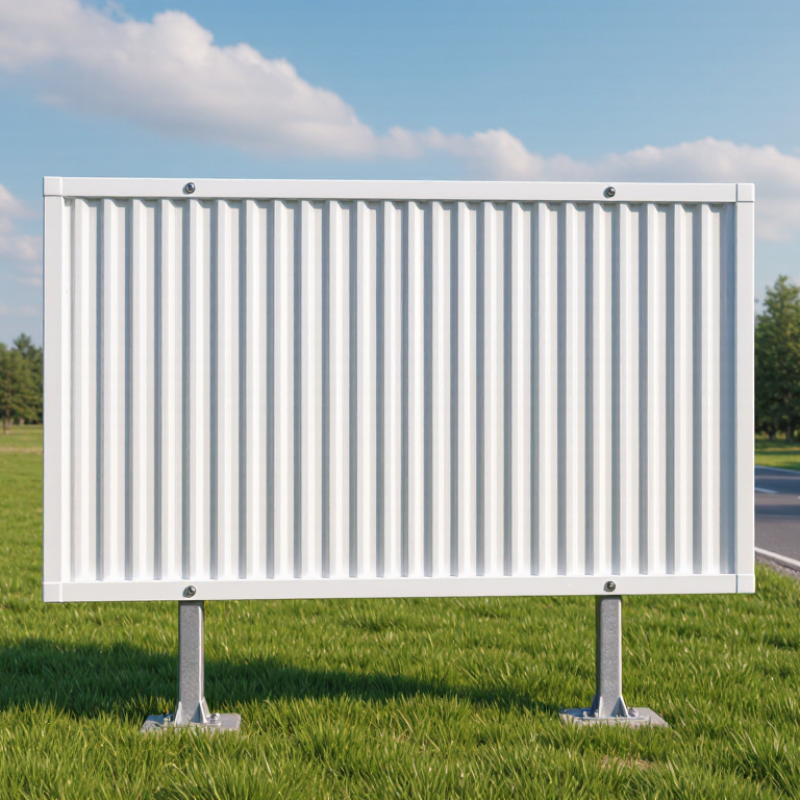
A corrugated plastic sign is a lightweight sheet made from fluted polypropylene. Two flat faces protect the hollow channels inside. This structure keeps the sign rigid without adding much weight. It is commonly used for real-estate notices, construction-site directions, event signs, election notices, and temporary retail displays. A typical 4-millimeter sheet can be carried with one hand. That practical detail matters when teams install hundreds of signs.
Industry data supports this wider use. Smithers’ 2024 report on digital print for signage and displays forecasts continued growth through 2028, driven by short runs and customized graphics. The report does not measure corrugated plastic alone, so the connection needs caution. It still reflects changing sign-buying habits. Choose UV-resistant ink for outdoor exposure, weatherproof printing, and reinforced eyelets for windy locations. ASTM D7611 identifies polypropylene as resin code 5, which helps confirm the core material during procurement. Ask for samples before ordering. Some surfaces look bright indoors but fade quickly under direct sunlight. I have seen this mistake waste both money and installation time. Check thickness, flute direction, edge quality, and recycling instructions. The cheapest sheet may bend too easily. A stronger sign is not always better, either; excess material can increase cost without improving visibility.
How to Choose the Best Corrugated Plastic Sign in 2026?
What is a corrugated plastic sign and where is it used?
Corrugated plastic signs are lightweight, weather-resistant panels made from twin-wall polypropylene.
They are commonly used for real estate signs, construction notices, event directions, political signage,
parking instructions, and temporary outdoor displays.
The chart compares four widely used sign formats by approximate display area. Smaller formats are practical
for doors, lawns, and short-distance messaging, while larger formats provide better visibility for roadsides,
construction sites, and outdoor events. Choose the size based on viewing distance, available mounting space,
wind exposure, and how long the sign will be displayed.
Which Sign Materials, Sizes, and Thicknesses Best Fit Your Needs?
Choosing the best corrugated plastic sign starts with its material.
Corrugated polypropylene is lightweight, water-resistant, and easy to move. It works well for open-house notices, temporary directions, and outdoor event signs. Its fluted center adds strength without making the panel heavy. For repeated outdoor use, choose a surface with UV-resistant treatment. Sun exposure can fade unprotected printing faster than expected.
Size should match viewing distance and installation space.
A small 12-by-18-inch sign suits garden paths or close-range notices. A 24-by-36-inch panel is easier to read beside a driveway. Larger signs need stronger supports, especially in windy areas. Keep important words large and limit crowded details. I have seen attractive signs fail because drivers could not read them quickly.
Thickness affects stiffness, durability, and cost.
Four-millimeter sheets are practical for short-term displays and sheltered locations. Five-millimeter sheets offer better rigidity for standard outdoor placement. Thicker panels may help with large formats, but they also add weight and require sturdier fasteners. Do not assume thicker always means better. Measure the mounting surface, consider local weather, and test one sample before ordering many. My own preference has changed after seeing thin signs bend around weak stakes. A stronger panel helped, but better support mattered more. Check both sides.
How to Compare Printing Quality, Colors, and Weather Resistance
When choosing a corrugated plastic sign in 2026, inspect print quality under daylight, not only indoor lighting. Fine text should remain sharp at arm’s length. Ask for a physical proof on the same plastic surface. Paper proofs can mislead.
The International Organization for Standardization’s ISO 12647-2 framework supports controlled color reproduction through measured density and color differences. For important brand-like colors, a supplier should provide ΔE00 readings, not vague claims about “bright printing.” Digital printing market data from Grand View Research valued the sector at approximately USD 35 billion in 2023, showing stronger demand for consistent, measurable output. Still, higher resolution does not guarantee better signs. Ink adhesion, surface treatment, and viewing distance matter more than impressive specifications.
Weather resistance requires evidence. The World Meteorological Organization reported that 2023 reached about 1.45°C above the 1850–1900 average. Heat, sunlight, rain, and rapid temperature changes can expose weak materials quickly. Request accelerated UV testing under ASTM G154 or equivalent procedures. Compare fading, cracking, edge curling, and ink adhesion after testing. A sign may look perfect after one week and fail after one season. That is the uncomfortable part. Outdoor performance also depends on installation direction and local climate. A north-facing sign may outlast an identical sign facing intense afternoon sun. I would test a sample outdoors for several weeks before ordering hundreds.
What Mounting Options and Custom Features Should You Consider?
Choosing the best corrugated plastic sign in 2026 means matching the mounting system to the site.
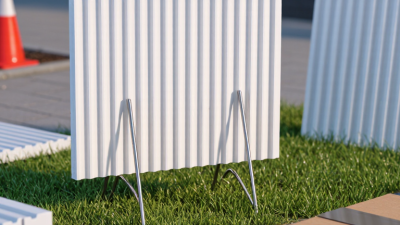
In field installations, I inspect wind, surface, viewing distance, and display time. For soil, twin-wire step stakes offer quick placement and easy removal. For fences, walls, or rails, grommets with cable ties distribute tension more evenly. Flat surfaces may need removable adhesive strips, but dust and cold can reduce their grip. Test a corner first.
For temporary indoor signs, hook-and-loop strips keep panels neat without drilling. They are less reliable outdoors. Strong wind can turn a light panel into a sail. Placement matters. Ask for UV-resistant inks and a flute direction that supports the sign vertically. Rounded corners reduce sharp edges near busy walkways. A custom-cut shape can improve visibility, although complex edges may weaken the panel.
High-contrast artwork helps drivers read from a safe distance. Add a matte finish when glare affects viewing. Reflective elements may improve nighttime visibility, but they cannot replace proper lighting.
Specify hole locations before production. A misplaced hole can hide part of the message behind a post. I once centered holes by appearance alone, and the sign tilted after installation. That mistake taught me to measure support points, not just artwork. Check the proof, dimensions, ink coverage, and mounting hardware together. Perfect on screen is not always practical outside.