How to Choose the Best White Corrugated Sign Board?
Choosing the right White Corrugated Sign Board starts with more than whiteness, price, or a glossy sample. It requires practical judgment.
Retail displays, directional signs, and temporary event graphics face different demands. A board beside a sunny window needs stronger surface stability. A floor-standing display needs reliable stiffness and clean edges. A small indoor sign may need less material, not more.
Grand View Research valued the global corrugated boxes market at approximately USD 205 billion in 2023. Its report also projects continued growth through 2030. Smithers’ corrugated packaging research highlights digital printing, short runs, and point-of-sale applications as important development areas. These findings matter because sign buyers increasingly expect fast customization without excessive inventory.
FEFCO describes corrugated packaging as a material supporting circular-economy systems. However, recyclability depends on local collection, coatings, adhesives, and contamination. The word “recyclable” needs context.
Packaging consultant Mike Ferrari often explains, “Packaging is the first moment of truth.” His observation applies to signage too. A White Corrugated Sign Board is often the customer’s first physical impression of a promotion, product, or location.
Experience reveals a simple problem. A board can look bright on a screen yet appear dull under store lighting. Fluting can show through thin faces. Corners can crush during delivery. These details are easy to underestimate.
This guide examines flute profiles, liner quality, print compatibility, moisture exposure, structural strength, and end-use conditions. It also questions a common assumption: the thickest board is not always the best board. Good selection balances appearance, performance, cost, and responsible material use.
Define White Corrugated Sign Boards: PP Flutes, 2–10 mm Thickness, and Uses
How to Choose the Best White Corrugated Sign Board?
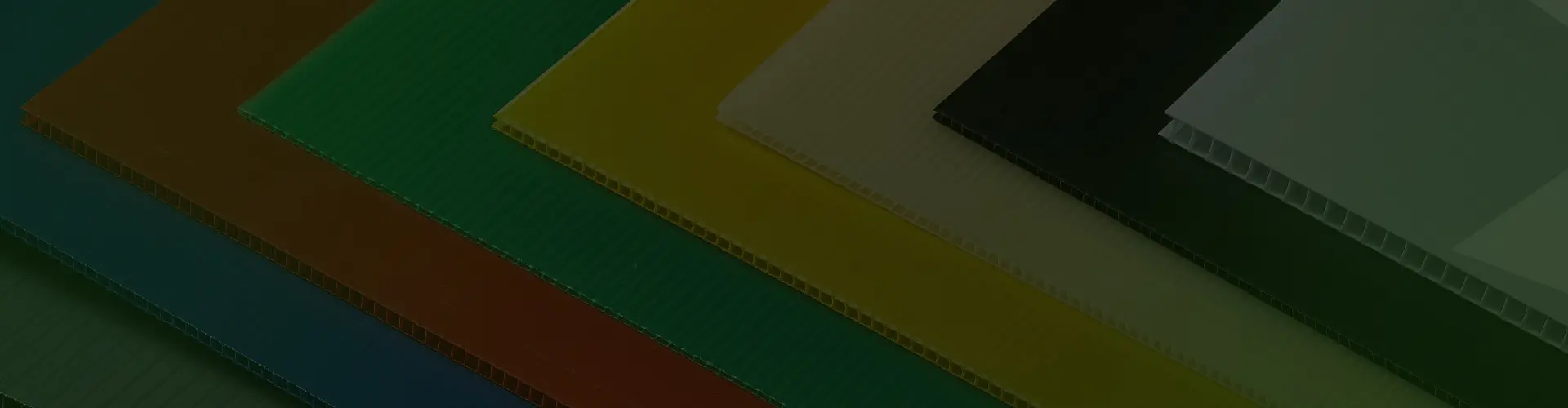
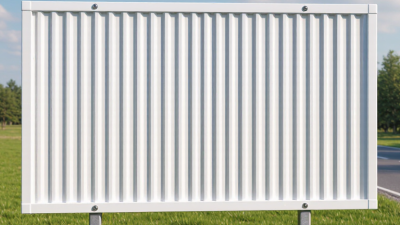
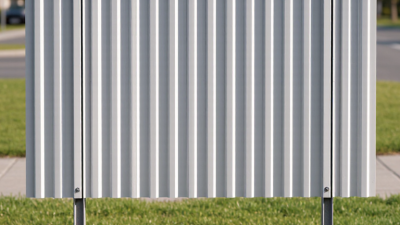
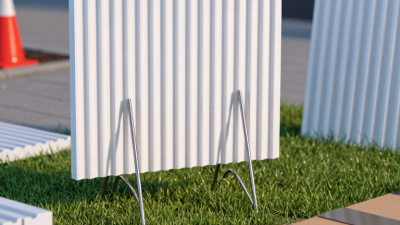
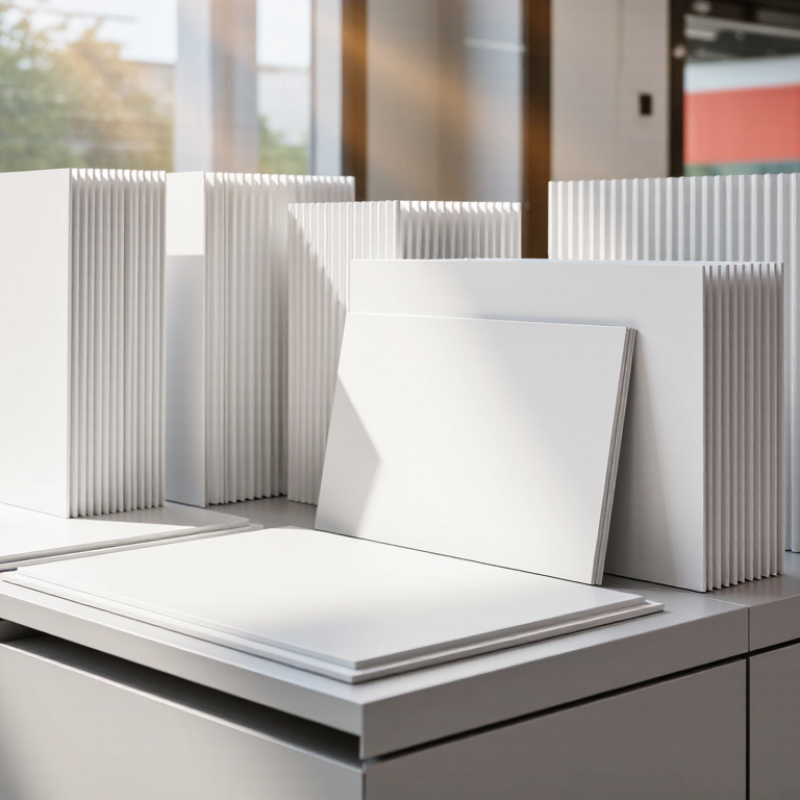
White corrugated sign boards are lightweight sheets made from fluted polypropylene, often called PP flutes. Two flat surfaces protect the inner ribs, creating a balance between stiffness and low weight. Thickness usually ranges from 2 to 10 mm.
2–3 mm
Thin boards suit short-term notices, shelf signs, and indoor displays.
4–5 mm
Medium sheets provide better support for estate signs, event panels, and small outdoor graphics.
6–10 mm
Boards in this range resist bending more effectively in larger signs, but they also cost more and need stronger fixing points.
A bright white surface helps printed colors appear cleaner and sharper. However, whiteness alone does not prove quality. Check the sheet’s flatness, rib consistency, edge finish, and resistance to cracking during cutting.
I have found that oversized panels can flex when wind catches them, even when the material feels rigid by hand. That is an easy detail to underestimate. Choose thickness according to panel size, display time, weather exposure, and mounting method.
Tips:
Test a small sample first. Bend one corner gently, inspect the cut edge, and leave the sample outdoors for several days. Compare it beside your intended artwork. A heavier board is not always the better choice; practical support often matters more than thickness.
Match Board Thickness and Flute Structure to Weight, Span, and Wind Loads
Choosing a white corrugated sign board starts with the load, not the color. FEFCO technical guidance places common paper flute profiles near 1.5 mm for E-flute, 3 mm for B-flute, and 4 mm for C-flute. Similar thickness ranges appear in many fluted polypropylene specifications. Thinner flutes suit lightweight inserts and short spans. Larger flutes resist bending better across wider panels, but they can show deeper surface texture under white facing layers. I often see buyers choose by thickness alone. That shortcut fails.
Span changes everything. A 600 mm panel may remain flat with a 3 mm board, while a 1,200 mm panel can visibly bow under its own weight. Use more support points before simply increasing thickness. For outdoor placement, calculate wind pressure using the local design standard. ASCE 7-22 expresses velocity pressure through qz = 0.00256 Kz Kzt Kd V² in US customary units. At 90 mph, the basic velocity term alone is about 20.7 psf before exposure and safety factors. That number surprises many installers. A lightweight board needs spacing, edge restraint, and secure fixings.
For a practical selection, match E-flute or thin polypropylene to small indoor signs, B-flute or medium fluting to moderate spans, and C-flute or thicker construction where stiffness matters. The exact choice still depends on temperature, moisture, fixing holes, and unsupported width. My own cautious rule is to prototype the largest panel outdoors for several days. Real gusts expose weaknesses that a clean workshop test can miss.
How to Choose the Best White Corrugated Sign Board?
Match board thickness and flute structure to the expected wind pressure, unsupported span, and sign weight.
Wind pressure is calculated using the physical relationship q = 0.613 × V², where q is pressure in pascals and V is wind speed in metres per second. Thicker boards and deeper or multi-wall flutes generally provide better stiffness for larger spans and exposed locations. Final sizing should be checked against local wind codes, fixing details, sign area, and support spacing.
Evaluate Whiteness, Ink Adhesion, and Print Quality with ISO 2470 and ASTM D3359
Choosing the best white corrugated sign board requires more than visual inspection. A bright surface may look impressive under showroom lighting, yet perform poorly during printing. ISO 2470 helps measure diffuse blue reflectance, providing a consistent whiteness reference for paper and board. Test conditioned samples under controlled lighting, because moisture and surface roughness can change the reading.
Print quality depends on ink adhesion as well. ASTM D3359 uses a cross-cut and pressure-sensitive tape test to assess how firmly ink remains attached. A clean grid suggests strong adhesion, while lifted squares indicate a weak bond or unsuitable surface treatment. Check solid color areas, fine text, and image edges. Watch for feathering, uneven coverage, dot gain, and visible pinholes. In production sampling, one bright sheet can mislead. I have seen boards pass a visual check but fail after handling. That gap deserves attention.
Tips:
Compare several samples from different batches. Record ISO 2470 readings beside ASTM D3359 results. Print a small test image before approving bulk material. Let the ink cure under normal conditions before testing adhesion. Do not rely on whiteness alone; excessive brightness can sometimes reduce color balance or reveal surface defects. A practical decision should combine measured whiteness, reliable adhesion, and clean printed detail.
Check Tensile, Flexural, Recycling, and Safety Compliance for PP Boards
How to Choose the Best White Corrugated Sign Board?
In sign production, I check a PP board’s tensile strength before judging its appearance. Tensile data shows how well the sheet resists pulling forces during installation and transport. A weak board may tear around cable ties or drilled holes. Ask for test results, not general claims. The testing method and sample thickness should be clearly stated. Looks can mislead.
Flexural strength matters when signs face wind, repeated handling, or uneven supports. A suitable board should bend slightly without cracking, then recover its shape. Check both flexural strength and stiffness. They are related, but they are not identical. A very stiff sheet can become brittle in cold conditions. This detail is easy to overlook. Field conditions matter more than showroom samples.
Recycling information should identify the polymer as polypropylene and explain the local recycling route. Clean, unprinted offcuts are usually easier to process than mixed or contaminated waste. Safety compliance also deserves documented evidence, including chemical restrictions, product labeling, and relevant fire or building requirements. Requirements differ by location. Do not guess. Request current declarations and independent test reports. I would also inspect edges, print adhesion, and surface damage after cutting, because small production flaws can weaken a board. No material performs perfectly in every application. Rechecking assumptions can prevent an expensive replacement.
How to Choose the Best White Corrugated Sign Board? - Check Tensile, Flexural, Recycling, and Safety Compliance for PP Boards
| Board Option |
Typical Thickness |
Typical Basis Weight |
Tensile Strength
MD / CD |
Flexural Modulus |
Recycled Content |
Recommended Use |
Key Selection and Safety Checks |
| Lightweight PP Corrugated Board |
3 mm |
450–650 g/m² |
20–30 / 15–25 MPa |
800–1,200 MPa |
0–30% |
Short-term indoor signs, temporary retail displays, event graphics |
Choose when low weight and easy cutting are priorities. Confirm sufficient tear resistance around eyelets and cable ties. |
| Standard White PP Sign Board |
4 mm |
650–900 g/m² |
22–32 / 17–28 MPa |
900–1,400 MPa |
0–40% |
General outdoor signs, directional boards, construction and real-estate signage |
A practical balance of stiffness, printability, weight, and cost. Request MD/CD tensile results rather than a single unspecified value. |
| Rigid PP Corrugated Board |
5 mm |
850–1,150 g/m² |
24–35 / 18–30 MPa |
1,100–1,600 MPa |
0–30% |
Large-format signs, free-standing displays, reusable site boards |
Prefer higher flexural modulus for long spans. Check panel deflection, wind loading, fastener pull-out, and edge-crush performance. |
| Recycled-Content PP Corrugated Board |
4 mm |
650–950 g/m² |
18–30 / 14–25 MPa |
750–1,300 MPa |
30–80% |
Indoor campaigns, temporary signs, applications with recycled-content targets |
Recycled resin can increase color variation and reduce mechanical consistency. Require a declared recycled-content percentage and batch test data. |
| UV-Stabilized PP Corrugated Board |
4–5 mm |
700–1,150 g/m² |
22–34 / 17–29 MPa |
950–1,600 MPa |
0–30% |
Longer-term outdoor signs exposed to sunlight and weather |
Ask for accelerated weathering results, UV additive information, print-ink compatibility, and a defined outdoor service-life claim. |
| High-Impact PP Corrugated Board |
4–5 mm |
700–1,150 g/m² |
24–36 / 18–31 MPa |
900–1,500 MPa |
0–25% |
Public-area signs, reusable promotional boards, handling-intensive applications |
Check notched impact strength, puncture resistance, rounded-edge design, and safe fastening to reduce injury and breakage risks. |
Technical and compliance checklist:
Verify tensile strength using a recognized plastics tensile method such as ISO 527 or ASTM D638, flexural properties using ISO 178 or ASTM D790, and impact performance using an applicable ISO 179, ISO 180, or ASTM D256 method. For recycling, PP is generally identified as resin code 5; confirm that the board is accepted by the local recycling system and remove non-PP materials such as PVC labels, metal eyelets, and incompatible laminates before recycling. Request applicable declarations for REACH and RoHS where required, confirm ink and adhesive safety for the intended use, and obtain fire-performance documentation only when the installation location or building code requires it.
The mechanical values shown are typical indicative ranges for white polypropylene corrugated sheets. Actual performance varies with resin grade, flute geometry, orientation, additives, recycled content, temperature, and test conditions; always review the current supplier test report before purchase.