China Top Corrugated Plastic Box Manufacturers and Suppliers
China’s corrugated plastic box sector serves agriculture, automotive, electronics, retail, and logistics. These boxes are made from fluted polypropylene sheets, often called PP corrugated board. Their light weight, moisture resistance, and reusable design make them useful for repeated handling. Yet performance depends on more than the material name. Sheet thickness, flute direction, edge finishing, and joint strength all matter.
Packaging author Walter Soroka’s work offers a useful principle, paraphrased here: “A package is only as dependable as its material, design, and production control.” That idea helps buyers assess a Corrugated Plastic Box supplier beyond a polished catalog. Ask for sample boxes, material specifications, load or stacking test details, and clear production tolerances. Check how handles feel when loaded, whether lids stay aligned, and whether printed surfaces resist scuffing. Small details show up quickly on a warehouse floor.
This guide introduces China’s leading manufacturers and suppliers, with attention to product range, customization, quality systems, and export experience. It is not a universal ranking; a strong supplier for produce may not suit sensitive electronic parts. Be cautious of claims that lack test records or precise specifications. A sample can look convincing. Production consistency is harder to judge. Buyers should compare quotations against the same box dimensions, board thickness, printing needs, and order volume. Some uncertainty remains until samples and factory controls are reviewed, so treat this guide as a starting point—not a substitute for verification.
Corrugated Plastic Boxes: PP Flute Structure and Typical 2–12 mm Sheet Range
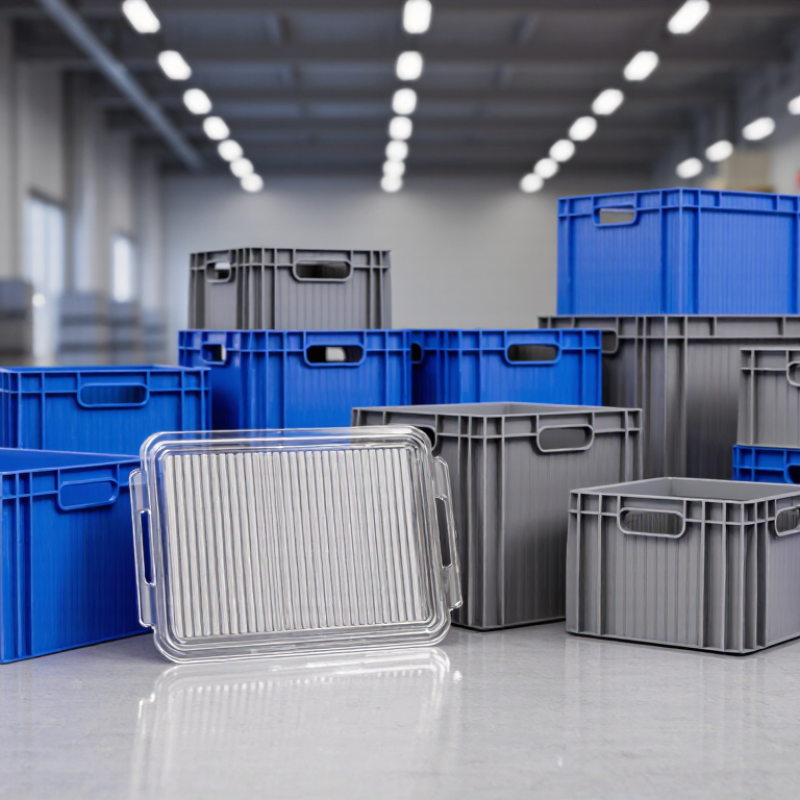
Corrugated plastic boxes use two flat polypropylene skins joined by vertical ribs, creating a fluted core. This structure keeps the sheet light while adding stiffness and cushioning. The hollow channels also make the material easy to cut and fold along planned crease lines. Light, but not flimsy. Performance still depends on sheet quality, flute direction, and box design.
Typical PP flute sheets range from 2 to 12 mm thick. A 2–3 mm sheet may suit dividers, small bins, or lightweight packaging. Mid-range sheets often work for reusable totes and produce boxes. Thicker sheets can add rigidity for larger containers, but thickness alone does not guarantee a safe load. Check the intended contents, box dimensions, stacking height, and handling conditions. A sample test is useful; specifications on paper can miss weak corners or poorly aligned flutes.
Tips: Ask suppliers for sheet thickness, flute direction, and load-test details. Fold a sample and inspect its corners after repeated handling. Do not assume a thicker board always performs better; oversized boxes can still flex. Recheck the design after real use.
Industry Specifications: GSM, Flute Thickness, and ISO 12048 Compression Testing
China Top Corrugated Plastic Box Manufacturers and Suppliers
Industry Specifications: GSM, Flute Thickness, and ISO 12048 Compression Testing
In supplier comparisons, GSM means mass per square metre, not strength by itself. A heavier polypropylene sheet may resist denting, yet flute geometry and resin distribution also affect stiffness. Record GSM and caliper together. For example, a measured 4 mm sheet can vary in mass and compression response. There is no universal GSM-to-load conversion. That matters. PlasticsEurope’s Plastics – the Fast Facts 2023 reports that packaging represented 39.8% of European plastics-converter demand in 2022. This signals market scale, not a box specification.
Ask suppliers to state flute thickness, sheet thickness, box dimensions, and test conditioning. ISO 12048:1994 describes compression and stacking tests for complete, filled transport packages using a compression tester. It does not set one pass load for every box. Test the actual box with representative contents, and record peak force, deformation, and failure mode. Compare like with like. A useful report should also identify sample count and conditioning. A neat datasheet can still hide weak corners or inconsistent flute walls. Specifications may look convincing before loaded testing; that gap deserves a second look. Request traceable test records, not only nominal GSM claims.
China Corrugated Plastic Box Specifications: GSM, Flute Thickness & Compression Testing
Indicative commercial specification ranges for corrugated polypropylene (PP) sheet. These are not fixed industry grades; confirm the actual sheet weight and thickness with the supplier.
GSM means grams per square metre of sheet. Nominal flute thickness describes the sheet profile and does not, by itself, determine box strength. ISO 12048 specifies compression and stacking test methods for complete, filled transport packages; it does not set a universal pass value. Specify the required test load, duration, and acceptance criteria for the intended package and use conditions.
China’s Leading Manufacturers: Product Types, Customization, and Export Readiness
China’s leading corrugated plastic box manufacturers typically supply reusable totes, foldable crates, sleeve packs, and compartmented boxes. Buyers can specify sheet thickness, flute profile, dimensions, divider layout, color, handles, and printed marks. A practical supplier review checks sample fit, load capacity, edge quality, and whether boxes stack securely when full. Small details matter.
The OECD’s Global Plastics Outlook reports that 353 million tonnes of plastic waste were generated worldwide in 2019; only 9% was recycled. This figure covers plastics broadly, not corrugated boxes specifically. Still, it makes material traceability and end-of-life planning worth discussing. Ask suppliers to identify the resin and explain recycled-content options, where suitable. For export orders, request flat-pack dimensions, pallet plans, sample approval, and clear quality records. These checks help reduce freight surprises and damage, though they cannot replace testing under actual handling conditions.
Tips: Send a physical sample and your packed-product dimensions before approving a large order. Test a loaded box through stacking and repeated handling. One weakness: printed colors may vary slightly between production batches, so confirm acceptable tolerances in writing.
How to Compare Suppliers: ISO 9001, MOQ, Lead Time, and Quality-Control Data
When comparing China’s corrugated plastic box suppliers, treat ISO 9001 as a process signal, not proof that every shipment will be consistent. ISO’s ISO Survey 2022 recorded 1,265,216 valid ISO 9001 certificates across 189 countries and economies. That matters. Request the certificate’s current scope, issuing body, and site address; confirm they match the manufacturing location. A certificate alone cannot show how a factory checks board thickness, dimensions, print adhesion, or load performance.
Compare MOQ with your real order quantity, and ask whether it applies per size, color, or print design. Get lead time split into sample approval, production, and dispatch. A single “20 days” quote can hide where delays occur. Request recent inspection records showing dimensions, thickness tolerance, defect rates, and corrective actions. Data should include dates and lot IDs, not just polished averages. For repeat orders, clarify how retained samples and out-of-tolerance cartons are handled.
Tip: Send the same drawing to shortlisted suppliers and place a small test order. Record sample variation, response time, and the cartons’ condition on arrival. One clean sample cannot predict a peak-season production run. Ask for an in-process inspection report from a regular lot, then compare it with the approved sample.
Buyer Checklist: Verify Load Ratings, Reuse Cycles, Compliance, and Samples
When comparing corrugated plastic box manufacturers and suppliers in China, start with the load each box must carry.
Ask for rated capacity under both static and moving conditions, not just a headline figure. Check dimensions, wall thickness, flute structure, handles, and stacking height against your product. A box holding 20 kilograms on a shelf may behave differently in a moving truck. Details matter.
Request test records that identify the sample design, method, and test conditions. Confirm whether claimed reuse cycles come from repeated opening, washing, stacking, or impact testing. Real use varies. Ask which material declarations or industry requirements apply to your market and product. A generic certificate may not cover every size or color. Some suppliers need a clearer drawing before they can give a useful answer.
Tips:
Send a loaded sample and inspect corner crush, lid fit, and handle comfort. Run a small trial with your own goods before approving production. Keep an approved sample and record its dimensions, weight, and revision. Sample checks can feel slow, but they are easy to underestimate.